Mediterranean Honey
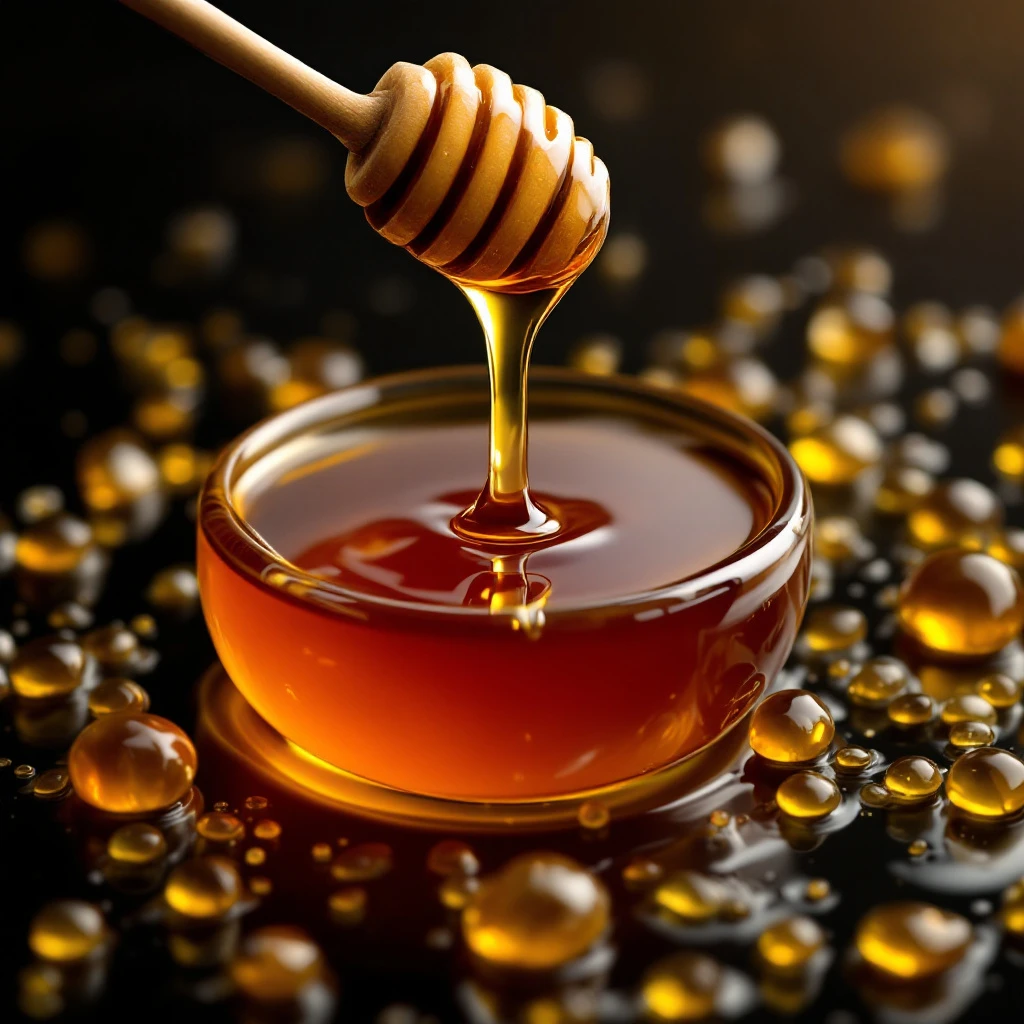
Golden nectar drawn from sun-drenched Mediterranean meadows, this honey brings warm, floral sweetness to perfumes that has anchored fragrances since ancient civilization.
Character
How it smells
The Mediterranean's liquid gold
Honey predates recorded history—cave paintings in Spain show humans gathering it at least 8,000 years ago, long before perfume existed as a concept.
Pairs beautifully with


Origin
Greece
Honey ranks among the oldest aromatic materials humans have ever used. Prehistoric cave paintings in Spain already depict people gathering honey from wild hives, placing its collection at least 8,000 years before the first written words. Mediterranean civilizations then shaped how we use honey in scent.
Ancient Egypt dominated perfume production by 1500 BCE, burning honey-soaked resins in temple ceremonies—the aromatic smoke symbolized communication with the divine. Greek perfumers developed melikē, a honey-wine mixture applied directly to skin. The Romans absorbed and refined these techniques, spreading honey-based fragrances throughout their empire and beyond.
Medieval Arab chemists improved distillation methods, extracting purer honey aromatics from floral and wax sources. When modern perfumery crystallized in 19th-century France, honey had already spent millennia as a foundational material—a warm, binding element that softens sharpness and rounds out fragrance compositions. Today perfumers still reach for honey when they need a scent that feels simultaneously ancient and timelessly appealing.
Wears it best
Fragrances featuring Mediterranean Honey
Brands
Brands known for Mediterranean Honey
Good to know
Questions, answered
The essentials on Mediterranean Honey in perfumery: how it smells, where it comes from, and how it behaves on skin.
What does Mediterranean honey smell like in perfume?
Mediterranean honey carries a warm, golden sweetness with floral undertones from local wildflowers. It smells less однообразно (monotonous) than table honey—thymey, slightly waxy, with hints of sun-dried herbs. The floral diet of Mediterranean bees, feeding on thyme, lavender, and orange blossom, creates a more complex aromatic profile than honey from mono-floral sources.
How do perfumers extract honey for fragrance use?
The most common method produces beeswax absolute through solvent extraction. Workers wash raw beeswax with alcohol, which dissolves the aromatic compounds. They then separate and evaporate the alcohol, leaving a concentrated waxy material with characteristic honey notes. Some perfumers also use supercritical CO2 extraction for a purer, more natural-smelling product.
Is natural honey better than synthetic honey in perfumery?
Natural beeswax absolute offers complexity that synthetics cannot fully replicate—layered notes that shift slightly between harvests and regions. Synthetic honey molecules like phenylacetaldehyde provide consistency and cost efficiency. Most modern fragrances use both: natural materials for authenticity, synthetics for stability and volume.
What role does honey play in fragrance composition?
Honey functions as both heart and base note. Its sweet, slightly sticky character emerges during the heart phase, adding warmth and roundness. More importantly, honey acts as a fixative—the sugars slow evaporation of more volatile top notes, extending the fragrance's presence on skin. Perfumers call these fixing properties invaluable.
What ingredients pair well with honey in fragrance?
Honey harmonizes naturally with warm, resinous, and spicy materials. Classic pairings include honey with vanilla, benzoin, and tonka bean for sweet depth. Jasmine and orange blossom amplify honey's floral dimension. In oriental compositions, honey meets oud, amber, and cardamom—creating scents with remarkable staying power.
How is Mediterranean honey different from other honey used in perfumery?
The difference comes down to botanical source. Mediterranean bees forage on native flora: wild thyme, lavender, rosemary, and citrus blossoms. This diverse diet produces honey with higher phenolic content and more aromatic complexity. Greek and Sicilian honey materials show distinct character—thymier, more herbal—than honey from single-crop regions.
What does the term "Mediterranean honey" specifically mean in perfumery?
It refers to honey or beeswax sourced from Mediterranean climatic zones—primarily Greece, Italy, Spain, and southern France. These regions share specific flora and growing conditions that produce honey with recognizable aromatic signatures. Perfumers specify origin because terroir matters: thyme honey from Crete smells measurably different from lavender honey from Provence.
Does honey in perfume harm bee populations?
Ethical sourcing practices minimize impact. Many fragrance houses now partner directly with beekeepers who practice sustainable harvesting, taking only surplus honey while leaving enough for the colony. Some perfumers use synthetic honey molecules to reduce demand for natural materials. The industry increasingly acknowledges its responsibility to the pollinators it depends on.





