Banana Puree
Banana holds a rare distinction in perfumery: no commercial extract exists from the fruit itself. Perfumers reconstruct its bright, tropical character from a single dominant molecule, making it one of the most precisely defined notes in any palette.
Character
How it smells
One molecule, one tropical dream.
A single ester called isoamyl acetate accounts for up to 80% of any reconstructed banana note.
Origin
Switzerland
The banana note emerged in perfumery through the same chemical revolution that transformed the industry in the 19th century. As organic chemists isolated and catalogued aroma compounds from natural sources, isoamyl acetate emerged as banana's defining molecule.
Early perfumers gained access to isolated aroma chemicals through advancing distillation and extraction techniques. These tools let chemists identify which specific compounds created a plant's scent signature. For banana, that signature proved to be isoamyl acetate.
This discovery carried particular significance. Most fruit notes in perfumery trace back to natural extracts or enfleurage. Banana stood apart, requiring reconstruction entirely from laboratory chemistry. The note became a textbook example of how synthetics could replicate naturals that resisted extraction.
Recent research from Southeast Asia, particularly the Philippines, has explored extracting aromatic compounds from banana peel waste. This work aims to create genuinely natural banana fragrance materials from agricultural byproduct, potentially offering a natural alternative to synthetic reconstruction.
Wears it best
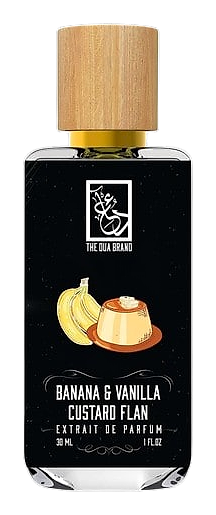
Fragrances featuring Banana Puree
Brands
Brands known for Banana Puree
Good to know
Questions, answered
The essentials on Banana Puree in perfumery: how it smells, where it comes from, and how it behaves on skin.
Is there a natural banana extract used in perfumery?
No commercial banana extract exists for perfumery. The fruit contains no extractable aromatic material, so perfumers reconstruct the note entirely using isoamyl acetate and supporting synthetic esters.
What is isoamyl acetate's role in banana fragrance?
Isoamyl acetate serves as the primary aroma molecule, typically comprising 60-80% of any banana reconstruction. It provides the characteristic sweet-fruity ester note recognized as banana.
Why does banana exist only as a synthetic note?
Banana fruit yields no usable aromatic extract through any known extraction method. Unlike rose or jasmine, the fresh fruit's scent compounds are too volatile or present in quantities too small for commercial extraction.
Does banana puree appear in any fragrance product?
Some artisanal perfumers have experimented with macerating banana fruit in alcohol for limited natural extraction, but this produces extremely weak, perishable results unsuitable for commercial fragrance production.
What other esters support the banana accord?
Isoamyl butyrate adds green-apple depth, ethyl butyrate contributes fermented tropical notes, and butyl acetate provides subtle pear facets. Together they create a complete, realistic banana character.
In which fragrance families does banana note appear?
Banana appears primarily in fruity and tropical fragrance families, often paired with coconut, mango, passionfruit, or ylang-ylang to enhance its exotic, summery character.
Is the banana note considered a top, heart, or base note?
Banana functions as a top note. The molecules responsible evaporate quickly, providing immediate bright sweetness that fades within the first hour of wear.
Could banana become available as a natural extract?
Current research from agricultural universities explores extracting aromatic compounds from banana peel waste. However, no commercially viable natural banana extract exists yet for perfumery.