Banana Liqueur
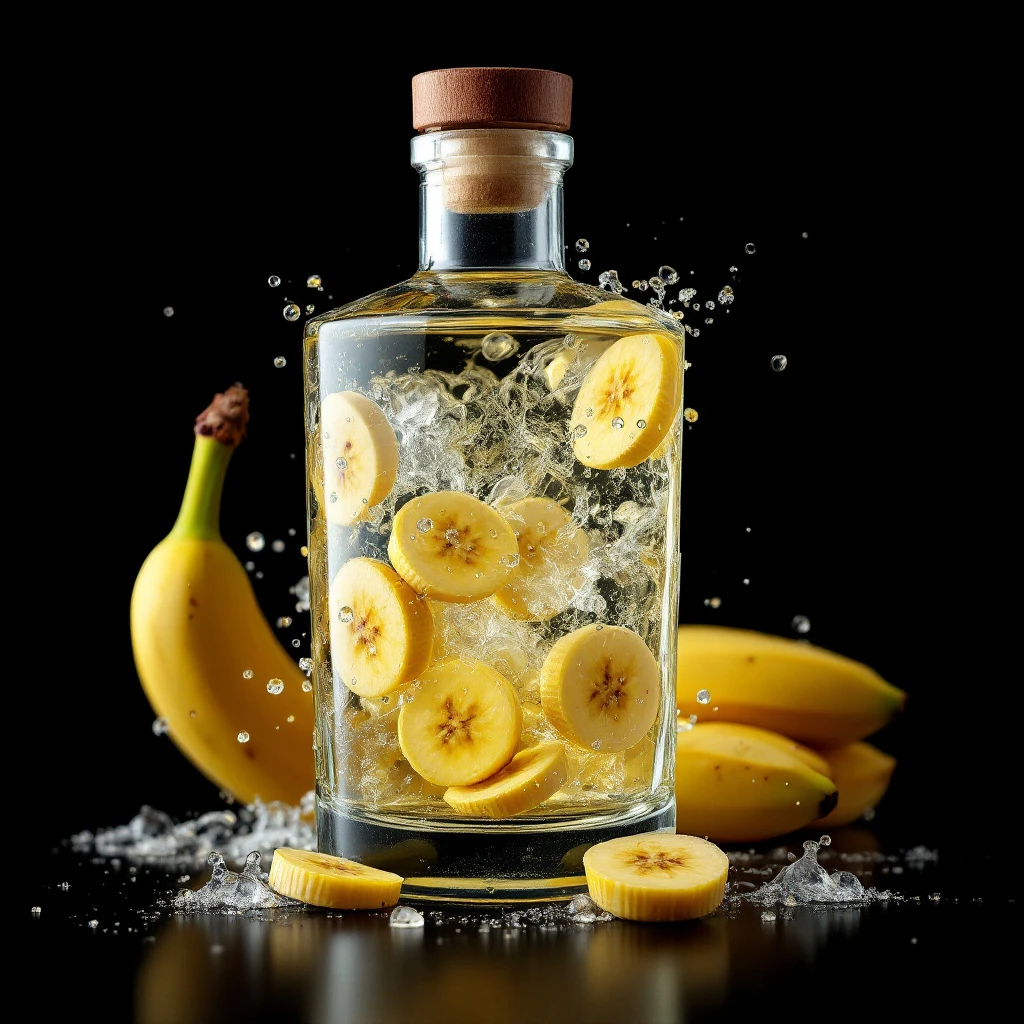
Banana liqueur note captures the warm, syrupy sweetness of ripe fruit steeped in alcohol. Isoamyl acetate delivers that unmistakable creamy banana aroma, lending gourmand compositions a boozy, dessert-like depth.
Character
How it smells
Ripe banana dipped in sugar cane rum
The characteristic banana aroma comes primarily from isoamyl acetate, the same ester responsible for the sweet scent of pear drops and chamomile.
Pairs beautifully with

Origin
New Guinea
Bananas have been cultivated for roughly 6,500 years, with domestication traced to New Guinea before spreading through Southeast Asia and eventually Africa. The fruit arrived in Europe in the medieval period through Arab traders, though it remained rare and exotic for centuries. Banana liqueur as a category emerged much later, gaining popularity in the 20th century as tropical cocktails and Caribbean-inspired drinks entered mainstream culture.
The molecular identity of banana aroma was isolated in the 20th century, when chemists identified isoamyl acetate as the primary volatile responsible for its distinctive scent. In perfumery, the banana accord evolved from simple fruity notes into complex gourmand compositions during the 1990s gourmand wave, when sweet, edible-smelling fragrances gained commercial momentum. François Coty's earlier work with solvent extraction in the early 1900s laid groundwork for capturing delicate fruit notes, though banana itself remained a novelty until synthetic reconstruction made it practical.
Today, banana liqueur notes appear in playful, youthful fragrances and niche gourmand creations alike.
Wears it best
Fragrances featuring Banana Liqueur
Brands
Brands known for Banana Liqueur
Good to know
Questions, answered
The essentials on Banana Liqueur in perfumery: how it smells, where it comes from, and how it behaves on skin.
What does banana liqueur smell like in perfume?
It smells like ripe banana infused in sweet alcohol, creamy and syrupy with fruity warmth. The dominant compound, isoamyl acetate, gives it a recognizable banana-pear character softened by sugary undertones.
Is banana liqueur note natural or synthetic?
Most banana liqueur notes in perfumery are synthetic reconstructions. Isoamyl acetate, the key aroma molecule, is produced through esterification because natural banana extracts are unstable and expensive to produce at scale.
What fragrance families feature banana liqueur?
Banana liqueur belongs primarily to the gourmand family, appearing alongside vanilla, caramel, and chocolate accords. It occasionally surfaces in fruity-floral compositions seeking tropical sweetness.
Where do bananas originally come from?
Bananas were first domesticated around 6,500 years ago in New Guinea. They spread through Southeast Asia before Arab traders introduced them to the Mediterranean during the medieval period.
Why is isoamyl acetate important for banana scent?
Isoamyl acetate is the primary volatile compound responsible for banana's characteristic aroma. This same ester appears in chamomile and pear, which explains the soft fruity sweetness shared across these ingredients.
Can banana liqueur be made from real bananas?
Yes, traditional banana liqueur is produced by macerating ripe bananas in neutral grain spirit with sugar syrup. In perfumery, however, synthetic reconstruction is far more common due to cost and shelf-stability concerns.
When did banana notes first appear in perfumery?
Banana accords became prominent during the 1990s gourmand movement, when sweet, edible-smelling fragrances gained commercial momentum. Earlier perfumers like François Coty laid extraction groundwork, though banana itself remained a novelty until synthetic chemistry made it accessible.
Is banana liqueur note safe for skin?
When used at standard perfumery concentrations, banana liqueur notes pose no specific safety concerns. Isoamyl acetate is classified as safe for cosmetic use by major regulatory bodies including IFRA-compliant formulations.





