The Story
Why it exists.
Hugo Boss
Germany · Est. 1924
Jean-Marc Chaillan and Pierre Wargnye are the perfumers behind Baldessarini. Chaillan is a French perfumer who created numerous Hugo Boss fragrances and is known for his work on Boss Bottled. Wargnye brings a more classical French perfumery approach to the composition, grounding the modern citrus technology in traditional structure. Together they produced a fragrance that is distinctly modern in its opening and classically composed in its drydown.
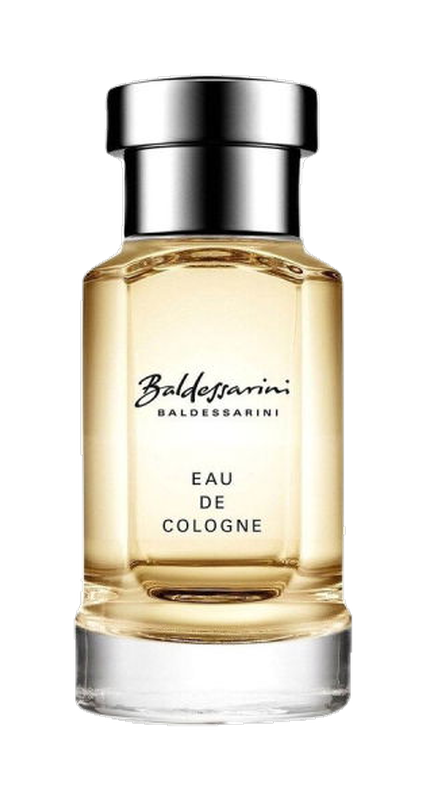
Est. 2002
In 2002, Hugo Boss was at a crossroads. The brand had built its reputation on sharp, corporate menswear, and its fragrance portfolio reflected that same conservative energy. Boss Bottled was the commercial anchor. But Werner Baldessarini, the former chief designer at Hugo Boss who had left to build his own luxury fashion line, wanted something different. He wanted a fragrance that carried the weight of his name, literally. The campaign tagline said it all: Separates the men from the boys. To embody that promise, Baldessarini hired Charles Schumann, the celebrated Munich bartender and author of the cult cocktail bible, as the face of the fragrance. Schumanns rugged, silver-templated authority was the perfect archetype for a fragrance that refused to apologize for wanting to be taken seriously.
If this were a song
Community picks
Room at the Door
Gogol Bordello
The Beginning
In 2002, Hugo Boss was at a crossroads. The brand had built its reputation on sharp, corporate menswear, and its fragrance portfolio reflected that same conservative energy. Boss Bottled was the commercial anchor. But Werner Baldessarini, the former chief designer at Hugo Boss who had left to build his own luxury fashion line, wanted something different. He wanted a fragrance that carried the weight of his name, literally. The campaign tagline said it all: Separates the men from the boys. To embody that promise, Baldessarini hired Charles Schumann, the celebrated Munich bartender and author of the cult cocktail bible, as the face of the fragrance. Schumanns rugged, silver-templated authority was the perfect archetype for a fragrance that refused to apologize for wanting to be taken seriously.
What makes the composition interesting is its structural tension. The damascones in the formula, molecules related to the rose absolute, create a metallic ringing note that vibrates at a frequency just above perception. This is the same family of molecules that would later power Dior Sauvages infamous opening. Baldessarini got there first, but quietly. The top note does not announce itself with the blunt force of modern masculines. It rings, it tingles, it intrigues. Behind that technological sheen sits a more traditional structure: citrus, spice, tobacco. The juxtaposition of the futuristic and the classical is where the fragrance lives.
The Evolution
Twenty-four years after launch, Baldessarini has aged with unusual grace. The citrus that once felt aggressive now reads as authoritative. The metallic opening anticipated the Sauvage era by over a decade, but it never adopted that fragrances blunt instrument approach. Instead, Baldessarini remains a quiet statement. On skin it develops slowly, the chamomile heart arriving gently, the tobacco drydown staying close for six to eight hours. It was reformulated when Mäurer & Wirtz took over production, as Procter & Gambles fragrance license moved. But the current EDC, produced by Mäurer & Wirtz under the Baldessarini Fragrances banner, retains the essential character that earned this fragrance two FiFi awards in 2003, a first for a German designer fragrance.
Cultural Impact
Baldessarini arrived at the cusp of a decade that would shift masculine perfumery away from the sillage monsters of the 1990s toward quieter, more sophisticated expressions. Its damascone-driven citrus opening anticipated the molecular modernity that Dior would later make mainstream with Sauvage. Yet Baldessarini never received the commercial revival that Sauvage did. It remains a hidden reference point, a fragrance that those in the know point to as proof that quiet confidence preceded loud branding by years.
The House
Germany · Est. 1924
Hugo Boss fragrances are the olfactory equivalent of their impeccably tailored suits: clean, confident, and unambiguously masculine. This is a house that doesn't whisper; it makes a clear statement of modern success. Its scents have become cornerstones of the male fragrance wardrobe for decades, defining a certain type of accessible, aspirational luxury.
The Creator
Jean-Marc Chaillan and Pierre Wargnye are the perfumers behind Baldessarini. Chaillan is a French perfumer who created numerous Hugo Boss fragrances and is known for his work on Boss Bottled. Wargnye brings a more classical French perfumery approach to the composition, grounding the modern citrus technology in traditional structure. Together they produced a fragrance that is distinctly modern in its opening and classically composed in its drydown.Baldessarini is both a person and a brand. Werner Baldessarini served as chief designer and board member at Hugo Boss AG before founding his own luxury label in 1993. The brand launched its first menswear collection in 1994 with the same adult, masculine positioning that would define its fragrance line. The original Baldessarini fragrance launched in 2002, and won two FiFi awards in 2003, a significant achievement for a German designer fragrance at the time. The brand now operates under Mäurer & Wirtz, which acquired the fragrance license from Procter & Gamble.
If this were a song
Community picks
The sound of steel-and-glass modernity, the ring of a cocktail shaker in a Munich jazz bar, tangerine zest hitting seltzer water at noon.
Room at the Door
Gogol Bordello










