



The Heritage
The Story of Hugo Boss
Hugo Boss fragrances are the olfactory equivalent of their impeccably tailored suits: clean, confident, and unambiguously masculine. This is a house that doesn't whisper; it makes a clear statement of modern success. Its scents have become cornerstones of the male fragrance wardrobe for decades, defining a certain type of accessible, aspirational luxury.
Heritage
Founded in 1924 by Hugo Ferdinand Boss in Metzingen, Germany, the company's origins are complex and shadowed by its early work producing uniforms during the Nazi era, a past for which the modern company has formally apologized. After the war, the founder's son-in-law, Eugen Holy, took over and pivoted the business away from workwear and towards high-quality men's suits. This shift in the 1950s and 60s laid the foundation for the sharp, sophisticated fashion brand we know today. It wasn't until the 1980s that the brand truly became a global powerhouse. The expansion into fragrance was a natural next step in building this lifestyle empire. In 1985, they launched their first scent, Boss Number One, a potent aromatic fougère that captured the confident spirit of the decade. However, it was the 1990s that cemented their place in perfume history. The launch of Hugo in 1995, with its iconic canteen-shaped bottle, captured a new, youthful energy, while the 1998 release of Boss Bottled became a genuine phenomenon. This warm, spicy, and sophisticated scent has remained a global bestseller for over two decades, spawning countless variations and defining the brand's scent identity for a generation.
Craftsmanship
Unlike heritage perfume houses with a dedicated in-house perfumer, Hugo Boss operates on a licensing model, a common practice for fashion brands. Since 2016, their fragrance division has been managed by the beauty giant Coty Inc. This means that instead of having one creative nose, Boss collaborates with a roster of the world's best perfumers from major fragrance production companies like Givaudan, Firmenich, and IFF. The brand provides a creative brief, and these master perfumers compete to translate the vision of a new scent into a winning formula. This process ensures access to a wide range of talent and the latest in molecule technology. Boss fragrances are known for their masterful blend of high-quality naturals, like the crisp apple and warm cinnamon in Boss Bottled, with advanced synthetic compounds that provide exceptional performance, clarity, and longevity. The goal is always to create a scent with a strong, recognizable signature that performs consistently, reflecting the brand's commitment to quality and precision engineering.
Design Language
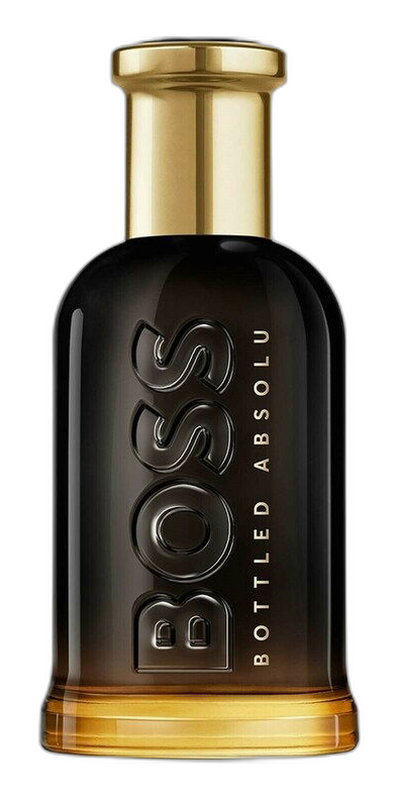
The visual language of Hugo Boss fragrances is a direct reflection of its German roots and tailoring heritage: clean, architectural, and functionally elegant. The bottles often feel substantial and masculine, favoring heavy glass, precise lines, and minimalist branding. The design for the classic Boss Bottled is a perfect example; its simple, flask-like shape with a brushed metal cap is understated, timeless, and feels engineered rather than decorated. It’s a piece of modern design that looks as good on a bathroom shelf as it feels in the hand. This sober aesthetic is contrasted by the more playful design of the Hugo line. The famous canteen-shaped flacon for the original Hugo Man, complete with a fabric strap, spoke to a more adventurous, utilitarian, and youthful spirit. Across all its lines, the packaging is sharp and sophisticated, using a palette of silver, black, grey, and deep blue that reinforces the brand's core identity. There is no extraneous ornamentation; every element serves to communicate quality and modern luxury.
Philosophy
The philosophy behind Hugo Boss fragrances is one of extension, not invention. Each scent is designed to be an invisible accessory that completes the Boss look, embodying the same values as the clothing: confidence, ambition, and refined masculinity. The house isn't concerned with creating difficult, artistic statements. Instead, it focuses on crafting polished, highly wearable fragrances that empower the wearer in his daily life, from the boardroom to a weekend getaway. This approach is perfectly encapsulated in their long-running 'Man of Today' campaign, which presents a vision of success that is about integrity and drive, not just power. The fragrances are tools for self-expression, designed to make a man feel put-together and ready for any challenge. They are reliable, consistent, and always appropriate, much like the perfect white shirt or a classic navy suit.
Key Milestones
1924
Hugo Ferdinand Boss founds his clothing workshop in Metzingen, Germany.
1985
The brand launches its first men's fragrance, Boss Number One, marking its entry into the beauty industry.
1995
Hugo for Men is released. Its unique canteen-style bottle and fresh scent make it an icon of the decade.
1998
Perfumer Annick Menardo creates Boss Bottled, which becomes a monumental global bestseller and the brand's signature scent.
2016
Coty Inc. acquires the Hugo Boss fragrance license from Procter & Gamble, beginning a new chapter for the perfume division.
2017
The 'Man of Today' campaign launches for Boss Bottled, featuring actor Chris Hemsworth as its global ambassador.
At a Glance
Brand profile snapshot
Origin
Germany
Founded
1924
Heritage
102
Years active
Collection
2
Fragrances released
Avg Rating
3.6
Community sentiment