




The Heritage
The Story of Linari
Linari is a German luxury fragrance house where industrial design meets olfactory artistry. Founded in 2003 by Rainer Diersche, the brand began as a purveyor of exquisite home fragrances before expanding into personal perfumes in 2008. Their creations, housed in architectural bottles that double as objets d'art, represent a philosophy of pure symbiosis between scent and design. Working with master perfumers including Maurice Roucel and Mark Buxton, Linari crafts balanced, sophisticated fragrances that feel as considered as they smell.
Heritage
Rainer Diersche never set out to become a fragrance mogul. An industrial designer by training, he spent his early career working in Italian design stores in Munich, where he first encountered reed diffusers. The product intrigued him. The aesthetic possibilities excited him. In 2003, he launched Linari from Hamburg, named after a small village in Tuscany that captured the warm, sun-drenched elegance he wanted his brand to embody. The first three diffusers hit the market that year. They were immediate proof that Diersche understood something the fragrance world needed: consumers wanted their scents to look as good as they smelled. The business grew steadily, expanding from room fragrances into candles, then soaps, each product carrying that unmistakable Linari visual DNA. The real pivot came in 2008. After five years establishing themselves in home fragrance, Linari entered fine fragrance with four eaux de parfum: Angelo di Fiume, Notte Bianca, Eleganza Luminosa, and Vista Sul Mare. Mark Buxton and Egon Oelkers composed the scents. Heavy French glass bottles shaped like inkwells held the juice, each crowned with a cap of African wenge wood. It was a statement. Home fragrance had made them respected. Personal fragrance would make them remembered.
Craftsmanship
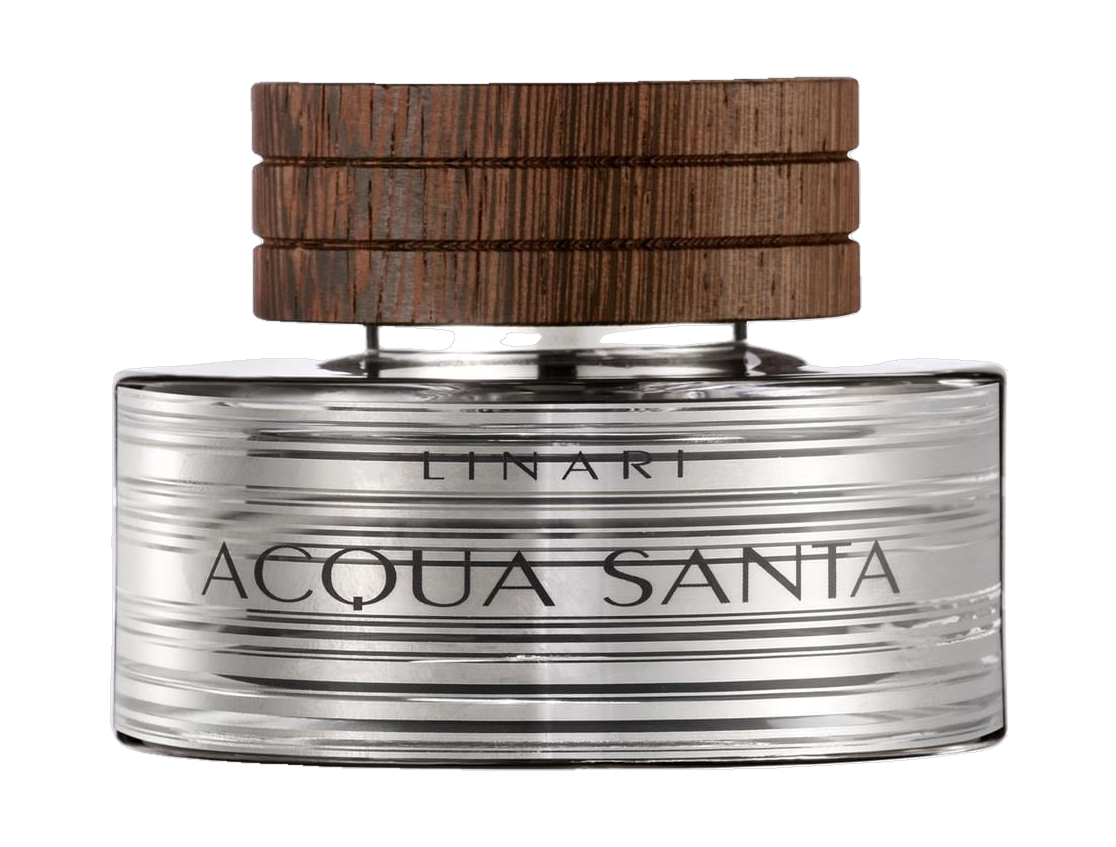
Linari's commitment to material quality runs deep. Their signature bottles use premium Italian glass, blown and shaped to exacting standards. The wooden elements, maple, wenge, zebrano, are sourced with the same care a furniture maker brings to heirloom pieces. These are objects designed to last, to be refilled rather than discarded. The fragrances themselves are composed by some of the industry's most respected noses. Diersche does not brief perfumers with price constraints or market trends. He starts with an ingredient, an idea, a feeling. Then he brings in the right nose to realize it. Maurice Roucel created Acqua Santa, described as clean as crystal-clear holy water. Mark Buxton, known for his work with Comme des Garçons, has been a recurring collaborator. The process is artisanal, unhurried, focused on the final experience rather than production schedules.
Design Language
Linari's visual language speaks the dialect of modernist architecture translated for the home. Clean lines dominate. Materials are honest: glass, wood, metal, nothing hidden or disguised. The iconic EDP bottles resemble vintage inkwells, heavy and substantial in the hand. African wenge wood caps add organic warmth to the crystalline glass. This aesthetic extends across every touchpoint. The Grandezza Superiore and Grandezza Imperiale diffusers are statement pieces at 3,000ml and 5,000ml, sculptural objects that transform a room before a single note reaches the nose. Even their travel line maintains the same visual discipline. It is design that whispers rather than shouts, confident in its restraint, timeless rather than trendy.
Philosophy
Linari operates on a simple but demanding principle: fragrance and design must exist in perfect symbiosis. One cannot dominate the other. Neither can be an afterthought. This philosophy stems directly from Diersche's background as an industrial designer who views every product as a complete sensory experience. The brand rejects ostentation. Their fragrances are balanced, cultured, subtle rather than shouting. The design is minimalist but warm, architectural but never cold. Every element serves the whole. When you buy Linari, you are buying a complete aesthetic statement, a philosophy of living that values quality craftsmanship and innovative composition without flash or pretension.
Key Milestones
2001
Rainer Diersche conceives the Linari concept after working in Italian design stores in Munich, inspired by reed diffusers
2003
Linari officially founded in Hamburg, Germany, named after a Tuscan village; first three room diffusers launched
2008
Brand enters fine fragrance with four EDPs: Angelo di Fiume, Notte Bianca, Eleganza Luminosa, and Vista Sul Mare
2010
Acqua Santa by Maurice Roucel released, expanding the personal fragrance collection
2012
Porta del Cielo launched, created by Mark Buxton, featuring 22-karat gold bottle accents
2022
Latest fragrance additions continue the brand's expansion with new compositions and limited editions
At a Glance
Brand profile snapshot
Origin
Germany
Founded
2003
Heritage
23
Years active
Collection
1
Fragrances released
Avg Rating
3.7
Community sentiment