The Story
Why it exists.
The beginning
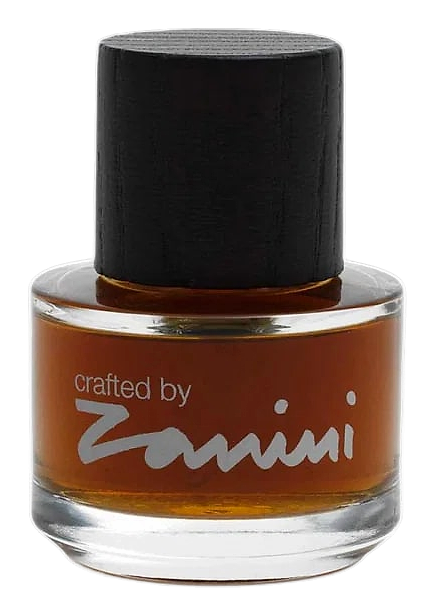
火马 means Fire Horse. In Chinese astrology, the Fire Horse year carries a charge: restless, fast, built to push forward rather than stand still. Filippo Zanini translated that charge into a bottle in 2026. The idea wasn't to illustrate an animal. It was to bottle the energy of a Fire Horse's gait: zest first, then momentum, then the slow exhaustion of embers after the run is over. Every note in Cavallo di fuoco works toward that feeling of forward motion that eventually burns down to warmth. Only 36 bottles exist. This is less a fragrance for a collection and more a postcard from a specific Chinese calendar year, released through a perfumer whose name carries the weight of authorship.
What separates this from other spicy-woody compositions is the way familiar ingredient categories get rearranged. There's no Calabrian bergamot, no Haitian vetiver, no Madagascar vanilla. Instead, the structure rests on osmanthus absolute, pomelo, and Chinese oud. The ember accord, smoky and dry, functions less as an afterthought and more as the gravitational center. Ginseng and jujube pull double duty, acting as bridges between the zest-and-spice top and the floral heart.
The evolution
The first ten minutes feel like a collision. Pomelo zest, kaffir lime, and mandarin crack open against Sichuan pepper and clove, while something already smoking sits underneath. The celery note, unexpected as it sounds, cuts through the sweetness like a knife through fruit. For the first 20 minutes, you'd believe this was a bright, sharp citrus-spice composition. At the 30-minute mark, osmanthus starts to bloom. It's not a Western osmanthus impression, sweet and apricot-adjacent. Here it reads more like dried persimmon and tea leaves, warmed by the ember accord that hasn't gone anywhere. Jujube adds a date-like depth that keeps the heart from feeling floral. Ginseng sharpens things back up every few minutes, like a persistent undercurrent. By hour three, the citrus has fully handed off to wood and smoke. Chinese oud enters quietly, not as a statement but as support for the ember note, which now feels like the real protagonist. Rosebud and a soft floral undertone add a touch of warmth without sweetness.
Cultural impact
Cavallo di fuoco occupies a particular position in the current niche landscape. With only 36 bottles produced, its reach is narrow by design, closer to a limited art release than a commercial fragrance launch. The 2026 release date ties it directly to the Fire Horse year in the Chinese calendar, giving it a temporal specificity that most fragrances deliberately avoid. The use of osmanthus absolute, Chinese oud, ginseng, and jujube places it within a small category of compositions that draw heavily from East Asian raw materials.