
The Story
Why it exists.
The beginning
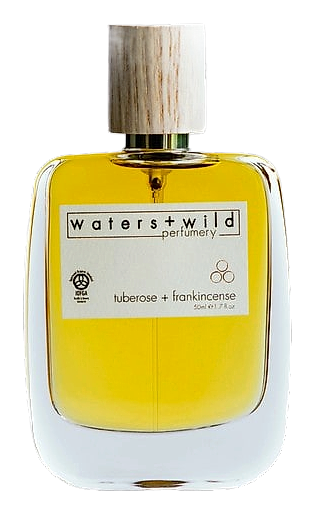
Tuberose + Frankincense opened the catalog at Waters + Wild Perfumery, the studio's opening statement in botanical perfumery. Tuberose + Frankincense was the line's flagship: a single, concentrated conversation between two materials that don't often share billing in commercial perfumery. The brand's own framing called it "An exotic been of intoxicating tuberose and deep aromatic frankincense. Classic and timeless." The ambition was never to soften either ingredient into something palatable. It was to let both speak at full volume, in their natural, unaltered form, and see what happened when they shared a room.
Tuberose and frankincense occupy very different territories in a perfume structure. Tuberose is lush, almost buttery, with a narcotic sweetness that can read as tropical or funereal depending on who you ask. Frankincense brings a dry, resinous bitterness with a green, almost pine-like lift. The tension between them is the point: one material is all indulgence and flesh, the other is incense and austerity, and the composition lives in that gap.
The evolution
The opening lands with frankincense and oakmoss doing the heavy lifting, slightly green and resinous, almost meditative. Soon after, the tuberose rises through that forest-floor hush, dense and creamy, the way the flower smells at dusk. The rose arrives quietly, softening the composition's sharper edges without sweetening it. As the wear progresses, vanilla and benzoin settle in underneath, giving the whole thing a low, golden warmth. The drydown holds close to skin with moderate longevity. What lingers isn't the tuberose, it's the frankincense, still faintly smoky and green, now wrapped in benzoin. On fabric the next morning, you'll find something quieter, closer to vanilla and oakmoss, the floral having stepped back to let the base notes finish speaking.
Cultural impact
Within the world of indie and botanical perfumery, Tuberose + Frankincense has carved out a quiet reputation. People who wear it tend to describe it in reverent terms, calling it a reference point for how a tuberose-forward composition can hold up against the resin without either ingredient disappearing. It shows up regularly in conversations about florals that don't lean on sweetness, and about frankincense compositions that treat the resin as a co-lead rather than a supporting player.