
The Story
Why it exists.
The beginning
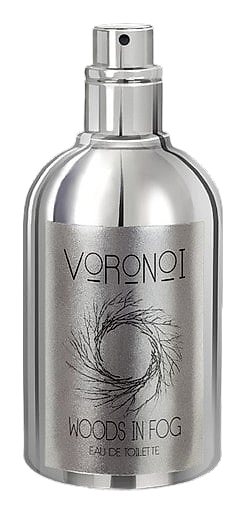
Voronoi operates like a perfumer running an experiment. Each release occupies its own territory, a distinct space with its own logic, and Woods in Fog claims the cell defined by atmosphere rather than structure. Where most compositions move from brightness to warmth, this one opens damp and stays damp. The concept isn't a place on a map; it's a condition. The brand describes it as a meditative, shadowy composition, an autumn forest obscured by fog. That phrasing matters. Fog isn't weather here. It's the medium itself, the thing that softens edges and turns sharp detail into suggestion. Soil Tincture appears as a named material, not just a passing note, a deliberate decision to anchor the composition in something geological rather than floral.
What makes the pyramid unusual is what it omits. There's no citrus, no traditional floral heart, no obvious sweetness to guide the nose. Instead, Nettle and Soil Tincture carry the opening while Petrichor, that specific mineral smell of rain on dry ground, does most of the thematic work. Petrichor brings a crushed-stone coolness and a wet-concrete tension that grounds everything around it, and it's the note that gives Woods in Fog its atmospheric signature. The Driftwood and Oakmoss in the base give it weight without warmth, keeping the composition cool and grounded.
The evolution
The first ten minutes read sharp, almost medicinal, a green, herbal slap from the Nettle that some wearers find disorienting. One reviewer described it as sinking into the nasal passages with an almost aggressive bite. That shock fades fast, but the green tinge holds through the first hour, weaving through Petrichor's mineral wetness. Around the 90-minute mark, the composition reorganizes. The Soil Tincture rises as the herbal sharpness recedes, and Driftwood starts surfacing with a damp, bark-heavy texture. Oakmoss settles underneath, giving the whole thing a mossy, root-dense feeling, less an opening and more a clearing. By hour three, the Vanilla arrives quietly. Not sweet. Soft. It rounds the mineral edges without adding warmth, making the drydown feel like the same fog, just later in the day.
Cultural impact
Woods in Fog found its audience through fragrance communities, where its dirt-forward, fog-soaked character resonated with wearers looking for something mood-driven and unconventional. The composition reads less like an accessory and more like an environment you step into, and that quality has shaped how people talk about atmospheric perfumery in indie spaces. Wearers who reach for Woods in Fog tend to describe it in terms of place and weather rather than compliments or compliments-adjacent compliments, and that vocabulary has filtered into broader conversations about what indie fragrance can do. The scent invites slow wear.