The Story
Why it exists.
The beginning
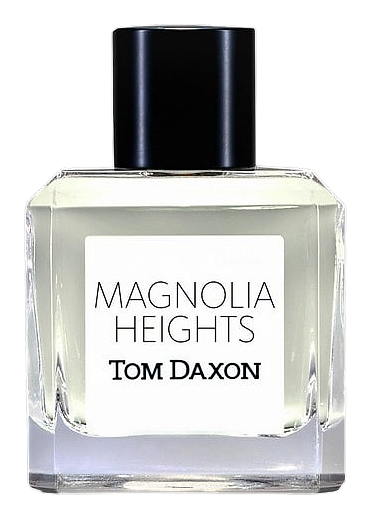
Magnolia Heights arrived in 2016 as Tom Daxon's tenth fragrance, a study in the magnolia tree itself, not a softened interpretation of what one might smell like. The official brief was straightforward: translate the perception of a magnolia in full bloom, growing in endless alleys rather than a single specimen. What makes that ambition unusual is the source material. Magnolia flower oil carries delicate, green, fruity facets that most compositions either bury under sweetness or erase entirely. Gardenia and jasmine sambac enhance those green and fruity dimensions, creating an interplay that feels both vibrant and nuanced. Ylang-ylang and cedar add complementary layers to the composition, each bringing their own character without attempting to mimic a specific visual quality.
The most interesting choice in Magnolia Heights is what it refuses to do. Magnolia, as a natural material, sits in a tricky middle ground, green enough to feel aromatic, creamy enough to feel floral, fruity enough to feel almost citrus-adjacent. Most commercial magnolia fragrances smooth out that complexity into something pleasant and forgettable. Here, the green facets are preserved. Violet leaf in the opening reinforces them rather than softening them. The result is a magnolia that smells like the flower, not a perfume about magnolia. Cedar in the base does something unexpected: it keeps the drydown from becoming another white floral cloud.
The evolution
The opening announces itself quickly, gardenia and ylang-ylang arriving together with a brightness that is not quite citrus but carries that same immediate clarity. Violet leaf is the quietest top note but the most important one: it keeps the gardenia from going tropical too fast. Within 20 minutes, the jasmine sambac begins to assert itself, pushing the composition toward its richest phase. The magnolia, despite giving the fragrance its name, arrives mid-development, not as a dramatic reveal but as a settling-in. This is when the green gives way to cream, and the composition reads as genuinely floral rather than green. The drydown is where cedar and musk take over, and here is where things get interesting: neither dominates. The cedar keeps the musk from becoming disposable, and the musk keeps the cedar from reading as masculine.
Cultural impact
Magnolia Heights is a white floral fragrance that balances creaminess with botanical crispness, standing apart from more traditional interpretations of the category. The green-floral subcategory, of which Magnolia Heights is a representative example, offers a distinctive approach to white floral construction, emphasizing freshness alongside depth. Tom Daxon's positioning of this release within a house philosophy of ingredient transparency and restraint gives the fragrance a clear identity in the niche market.