
The Story
Why it exists.
The beginning
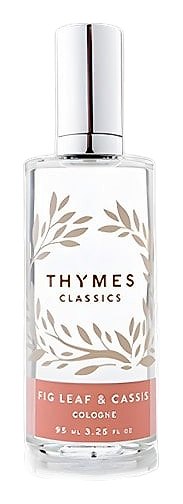
Fig Leaf & Cassis arrived in 2000 as part of Thymes' botanical wellness positioning, a Minneapolis brand that had spent two decades building a following around plant-based formulas and quiet confidence. The pairing of fig leaf and blackcurrant was unusual at the time: the cool, slightly saline green of fig leaf against the dark, jammy fruit of cassis. Grounded and luminous. Neither note had appeared much in mainstream American fragrance. Thymes saw an opportunity to do something the bigger houses hadn't tried yet, a scent that smelled like a specific place and time rather than a category. The intent was botanical clarity: ingredients that behaved, not ingredients that performed. Fig leaf is the protagonist here, not a supporting note in a florist's arrangement. Cassis lifts it without sweetening it. The result reads as a morning garden, the kind you might actually have, not the fantasy of one.
Fig leaf is the uncommon choice. Most fragrances use fig in the drydown, or not at all, the note requires a certain coolness in the formula to stay recognizable without turning medicinal or green-soap. Here, the fig leaf opens sharp and stays for most of the wear, pulling a slightly saline quality from the stem-and-leaf accord that creates genuine coolness against warm skin. Cassis, blackcurrant, is used sparingly but purposefully. Its dark, jammy character prevents the green from reading as austere or one-dimensional, adding a fruit depth that feels intentional rather than decorative.
The evolution
The opening is brief: mandarin and cassis arrive bright, the citrus zests cleanly while the blackcurrant adds dark fruit immediately. Fig leaf enters within minutes and takes over. That's the tell. The cool, slightly saline green note that gives the fragrance its identity arrives fast and doesn't cede territory. The heart is fig leaf's longest phase. The juniper threads through in the background, adding a faint pine lift that keeps the green from going flat. Cassis settles underneath, providing fruit depth without sweetness. This is the core of the wear, 2 to 3 hours of botanical coolness that doesn't drift into soap or cleaner territory the way many green fragrances eventually do. The drydown belongs to cypress. Dry, resinous, faintly pencil-shaving. The cassis doesn't disappear entirely, it softens into the base, a quiet ghost of the opening fruit that most fragrances in this family lose completely. The fragrance maintains its presence throughout a full day of wear. The sillage is personal. Someone standing close will notice it.
Cultural impact
Fig Leaf & Cassis occupied an unusual position at its 2000 launch: an American botanical brand doing a green-fruit composition that most European niche houses hadn't yet explored. The combination of fig leaf and blackcurrant predates the fig-forward wave that hit niche perfumery in the mid-2010s by fifteen years. Wearers describe it as the scent of someone who walks into a room and doesn't need to announce themselves, a quality that aligns with Thymes' broader positioning around quiet confidence and botanical wellness rather than performance or projection.