
The Story
Why it exists.
The beginning
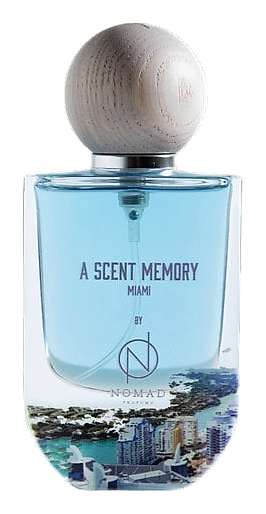
The Dua Brand centers itself on a specific kind of olfactory project: building original compositions that translate the sensory texture of place into something wearable. Miami is part of the Nomad Profumo collection, a series built around locations the perfumer has actually visited. The premise here is less about capturing a city and more about bottling a memory of standing in one. Miami reads as a scent memory rather than a city profile. It's the Florida coast filtered through one person's sense memory: the rapping of longboard wheels on boardwalk planks, palm trees ringing the shoreline, the kind of heat that makes cold drinks feel urgent. The brand's house style leans into transparency and reconstruction, but in this composition there's no reference being imitated.
What makes Miami interesting isn't the citrus, because citrus is everywhere. It's the mojito accord, a gourmand-adjacent construction that threads crushed sugar and mint into a salty sea breeze framework. That tension between sweet and saline is the whole point. The ambergris base grounds everything with that warm, slightly animalic depth, turning what could read as a simple tropical splash into something with actual skin. Florida grapefruit and temple orange supply the brightness, but it's the mojito and ambergris combination that gives the composition its personality.
The evolution
The first ten minutes are loud. Grapefruit and orange hit bright, almost tart, with mint threading through like something cooling in the back of your throat. The mojito accord arrives fast, sweet and herbal, the crushed sugar pulling the citrus into edible territory. The sea breeze and aquatic notes keep everything lifted, so the sweetness never feels heavy. There's a particular pleasure in how the mint behaves here: it doesn't announce itself so much as it cools the edges of the citrus, giving the opening a slight effervescence that reads as carbonation, as a drink poured over ice. By the thirty-minute mark, the mint and sugar start to recede. The citrus dulls. What replaces them is where Miami earns its keep: ambergris. It rises warm and slightly musky, a skin-scent rather than a sea-scent, carrying the white musk with it. That transition happens with surprising grace.
Cultural impact
Miami exists within a crowded category of tropical and aquatic fragrances, where citrus-marine combinations and beachy accords compete for attention on crowded shelves. What gives it distinction is the mojito accord at its core, a combination of crushed sugar, mint, and citrus that reads as edible and cocktail-like rather than simply fresh. That accord does particular work in the composition, pulling the bright grapefruit and orange away from standard sport-fresh territory and into something that feels like a specific drink rather than a generic tropical idea.