
The Story
Why it exists.
The beginning
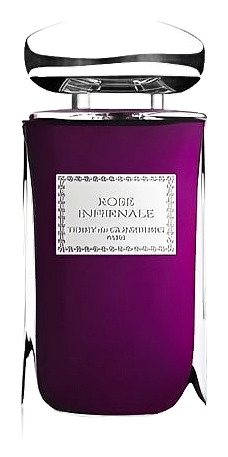
The name says it. Rose Infernale, rose from hell, or rose of the inferno, depending on which translation catches you. Terry de Gunzburg built a house on the idea that fragrance should transform, that scent carries weight and intention. For this 2014 creation, Michel Almairac was given a particular brief. The answer lives in the bottle: a rose that has clearly been somewhere, something with history and weight, a floral that came through fire and stayed.
The structure is deliberate in its imbalance. Floral notes make a brief appearance at the opening, leading the composition briefly before incense takes over almost entirely for the middle act. This isn't rose-and-incense as a predictable warm-spicy pairing, the rose is almost swallowed, present more as memory than melody. Haitian vetiver grounds the smoke without sweetening it. The Turkish Damask rose doesn't soften the composition, it survives it. That's the unusual move here: using rose as a survivor note, not a hero note.
The evolution
The opening is a soft floral haze, a rose not yet committed to its own story. Then Somalian frankincense arrives. It doesn't creep. It takes over. For the next several hours, this is a smoke fragrance wearing a rose's ghost. The Turkish Damask reasserts itself at a later point, but changed, drier, tinged with something that isn't ash but remembers it. Vetiver settles into the skin as the smoke thins, adding an earthy warmth that keeps the drydown from going cold. By the final hours, what's left is close and quiet, a lingering rose warmth on skin that still smells like somewhere it burned.
Cultural impact
Rose Infernale occupies a particular position in the rose-smoky category. It's smoke-forward and floral oriental in structure, and it attracts wearers who want something with more to say. The composition builds quiet devotion among those who find it, recommended person-to-person rather than discovered through mainstream channels. It's the kind of scent that creates conversation because it operates in its own register, not because it tries to fit expectations.