
The Story
Why it exists.
The beginning
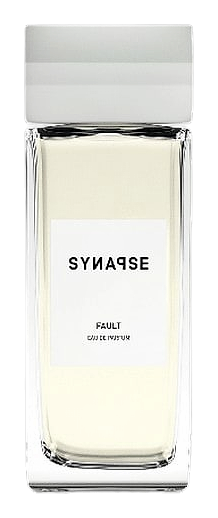
Fault is built on the premise that fragrance functions as a neurological trigger rather than mere pleasantness. The name carries weight: fault as geological fracture, as blame, as the moment where contact becomes unavoidable. Synapse's framework treats scent as a trigger, and Fault leans hard into that concept. It is the fragrance of a charged moment, a mistake that wasn't, or wasn't yet. The brief copy reads: "It's my fault. For the night. For the fast lightning. For your dewy lips." The intent is unmistakable. This is intimacy mapped onto skin. Not romance. The thing that happens when romance has already happened and something more complicated begins.
What makes Fault structurally unusual is the repeated presence of ambergris and graphite across every layer of the pyramid. Most fragrances move you through notes, citrus opens, florals heart, woods settle. Fault keeps circling back to its two anchoring materials: ambergris providing warmth, marine depth, and a faint animalic edge that no synthetic replicates cleanly; graphite delivering cool mineral texture, the smell of a freshly-sharpened pencil or rain on hot pavement. The jasmine appears in both top and heart, a thread of white floral that could read sweet but here reads green and slightly indolic, present, not polite. Anise in the top accord is the wildcard: sharp, licorice-adjacent, unexpected.
The evolution
The opening hits bright and strange, tangerine zest meets anise bite, then graphite arrives like cold water, pulling everything toward mineral. Jasmine doesn't announce itself; it hovers beneath, green and slightly animalic. The citrus begins to recede as the incense emerges, dry and resinous, while cedar leaves add a coniferous lift that keeps the composition from going dark. Musk and ambergris deepen the warmth. Graphite stays present as a cool undercurrent, and jasmine finally blooms sweet and powdery. The drydown is where Fault earns its reputation. Vanilla rises last, soft and warm, wrapping around the musk and cedar into something skin-like, intimate, close. Ambergris lingers longest, the tell that this wasn't a clean fragrance to begin with. The sillage stays close to the body, present without overwhelming, inviting those nearby to lean in rather than pushing scent across a room.
Cultural impact
By refusing to name perfumers and presenting releases simultaneously, Synapse introduced a different model for how fragrance collections could exist in the market. The graphite note itself stands out as an unusual choice for luxury fragrance, drawing from industrial and artistic contexts where mineral-cool accords have long been valued for their precise, almost clinical quality. This mineral register offers something distinct from traditional perfumery materials, creating an accord that challenges expectations about what luxury fragrance materials should be.