
The Story
Why it exists.
The beginning
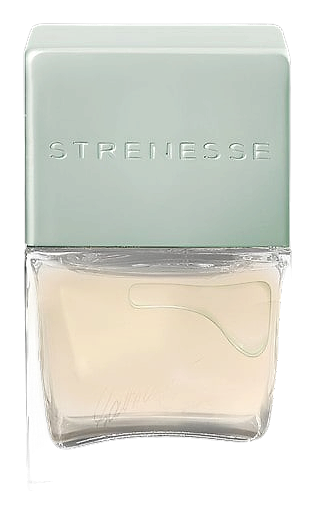
By 2012, Strenesse had spent over a decade building its perfume identity, understated compositions that complemented rather than commanded. Cashmere & Musk arrived that year from perfumer Ursula Wandel, a study in restraint. The name says everything: cashmere for softness, musk for closeness. No metaphor. No story to decode. Just the thing itself.
The pyramid is unusually lean, three layers, four materials. Cashmeran anchors the structure, a synthetic that does exactly what the name promises: it smells like the fabric. Benzoin adds a warm, slightly resinous sweetness. Tonka bean deepens that warmth into something powdery and edible. Vanilla closes the arc, soft and persistent. It's a straightforward proposition. Almost suspiciously so.
The evolution
Cashmeran opens. The effect is immediate, snug, soft, like pressing your nose into a cashmere scarf still warm from wearing. There's no citrus brightness here, no sharp top to announce itself. Just the sensation of fine fabric against skin. Within the first hour, benzoin and tonka bean arrive together. They don't compete, they amplify. The warmth becomes honeyed, sweet, the kind of sweetness that stays quiet rather than announcing itself. This is the heart of the fragrance: warm and powdery and deeply wearable. Vanilla takes over around the third hour. The drydown is intimate, a soft persistence that stays close to the skin. Cashmere & Musk doesn't project much after the first two hours, moderate sillage at best. It becomes a skin scent in the truest sense. The kind of fragrance someone notices only when they're close enough to breathe you in.
Cultural impact
Released in 2012, an era when projection and sillage were still the dominant metrics of fragrance success. Cashmere & Musk went the other direction, an intimate wear, a skin scent in the original sense. It found its audience among those who wanted softness over spectacle, and remains a cult favorite for close encounters.