
The Story
Why it exists.
The beginning
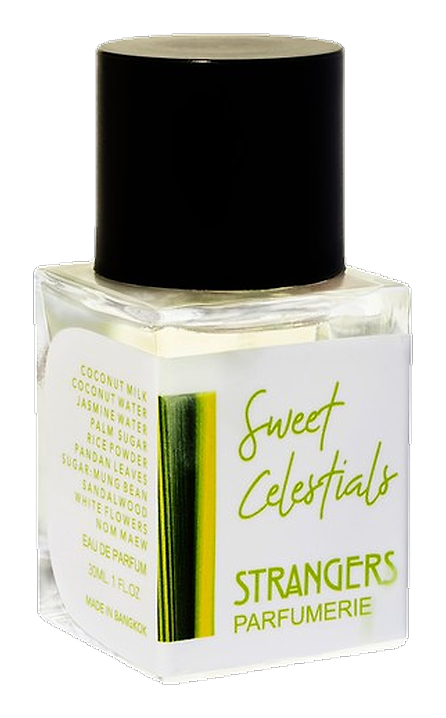
Sweet Celestials draws its name from Khanom Chan, a beloved Thai dessert crafted with pandan and coconut milk. The layered construction of the original sweet, where each stratum adds its own character to the whole, became a guiding principle for Prin Lomros in translating that concept into scent. The opening captures the green, slightly vanillic quality of pandan leaves, bright and aromatic. Coconut milk provides a rich, opulent heart that feels indulgent without being heavy. Delicate white florals, including Nom Maew, a rare Thai blossom with a soft, nuanced presence, add complexity that rewards attention. This isn't a literal recreation of the dessert.
What makes the structure interesting is how the coconut element functions at every level without becoming monotonous. Coconut water opens with a sweet, almost transparent brightness that feels light and effervescent on first spray. Coconut milk arrives in the heart with body and richness, adding a creamy texture that deepens the scent. The drydown brings warmth through sandalwood and palm sugar, giving the finish a lingering quality that stays close to the skin for hours.
The evolution
The opening is pandan and coconut water, bright and slightly green, with a natural sweetness that reads as vanilla-adjacent. Nom Maew lingers in the background, a floral note that avoids heaviness and keeps the top notes feeling fresh. Within the first hour, coconut milk takes over as the dominant presence. The texture shifts from watery transparency to something richer and more opulent. Mung bean adds a powdery sweetness that arrives quietly, like rice flour folded into batter, blending seamlessly with the coconut. Jasmine water keeps the heart from becoming heavy, adding an aquatic floral layer that breathes and prevents the composition from feeling static. By hour three, the drydown settles into a creamy coconut warmth, with sandalwood and palm sugar providing depth beneath.
Cultural impact
Sweet Celestials occupies a distinctive space where tropical fragrance meets Thai culinary tradition. The combination of pandan and coconut milk, ingredients familiar from Southeast Asian kitchens, offers something that feels both exotic and approachable. For those who have experienced pandan desserts or Thai coconut sweets, the fragrance lands with a sense of recognition and nostalgia. For those encountering these flavors for the first time, it provides an introduction that feels familiar in the best way, sweet, edible, comforting, without being generic or one-dimensional.