
The Story
Why it exists.
The beginning
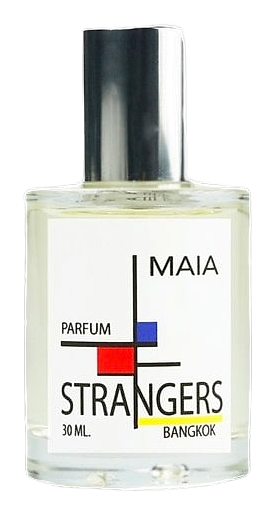
Maia takes its name from the Greek goddess of spring and growth, a figure for renewal, abundance, the earth coming back to life. The brand's description is direct: a celebration of blossoms, green grass, and honey. Prin Lomros built this as an olfactory portrait of a season at its peak, when everything is blooming at once and the air smells like the world waking up.
What's striking here is the structural choice. Rather than letting one dominant floral lead, Lomros stacked seven white florals into the heart, sweet pea, orange blossom, peach blossom, white peony, white frangipani, lilac, and heliotrope. The result isn't confusion. It's abundance. The bergamot in the top keeps things from going syrupy, and the honey threads through to lift without sweetening. Then the oakmoss enters, the chypre anchor that gives this garden weight and prevents it from floating away entirely. Patchouli does the same work in the base.
The evolution
The opening arrives bright and immediate, bergamot citrus, then the white florals pour in. Sweet pea reads first, green and gentle, before the orange blossom and peach blossom expand. The honey is there from the start, a warm undertone that connects everything. Then around the thirty-minute mark, the oakmoss begins to assert itself. The florals don't disappear, they deepen. The sweet pea becomes less green, more rounded. The white peony and frangipani move to the foreground, creamier now. The bergamot fades, replaced by a warmer, honeyed middle. Around hour three, patchouli emerges fully. This is the turn, from garden to earth. The florals are still there but they're no longer the loudest voice. Vanilla increases in presence. The drydown at hour six is quieter, warmer, closer to skin. Patchouli and vanilla hold the longest. The honey never fully leaves. On fabric the next day: a soft, sweet, floral warmth. Almost imperceptible. Worth finding.
Cultural impact
Maia occupies an unusual position in the niche landscape: a spring floral that refuses to be delicate. The white floral density could have produced something fragile, but the oakmoss and patchouli keep it grounded. Community reception has been strong, with wearers consistently praising its longevity and the way the notes blend into something greater than their sum. The fragrance was discontinued, which has made existing bottles more sought after among collectors.