
The Story
Why it exists.
The beginning
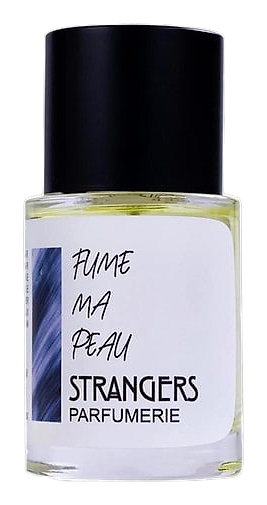
Fume Ma Peau takes its name and its fury from Jean-Luc Godard's 1967 film Weekend, a provocative study of civilization unraveling on a French country road. Prin Lomros translated that chaos into scent: the exhaust fumes choking Paris traffic, yes, but also the green countryside pressing against the city windows, and the cigarette smoke that clings to skin long after the last frame. It's not a love letter to New Wave cinema. It's a photograph of its exhaust. The fragrance captures the tension between urban decay and rural persistence, between the mechanical and the organic, wrapped in a haze of combustion and memory.
What makes this composition unusual is the collision it forces. Gasoline and industrial glue are synthetic materials, deliberately artificial, deliberately ugly, meeting Haitian vetiver and cypress, which carry the green weight of living things. Most fragrances keep their contrasts polite. This one holds tar and birch in the same breath. The styrax adds a balsamic sweetness that surfaces only when the smoke begins to settle, like a moment of unexpected grace in a film that offers none.
The evolution
The opening hits like a car idling in traffic, gasoline and tobacco smoke filling the air before you've even moved. It lingers there, acrid and direct, at first. Then the leather arrives. Not the polished leather of a new jacket, more like the interior of a vehicle that's seen years of use, combined with the chemical bite of industrial glue. The heart is where the film lives: urban, dense, confrontational. The drydown is where it exhales. Vetiver and cedar settle into something smoky and woody, with the galbanum's green edge persisting underneath like the countryside that never quite disappears, even in a city built to drown it out.
Cultural impact
Fume Ma Peau occupies a specific corner of indie perfumery for collectors who want fragrance to provoke rather than comfort. Its Godard inspiration places it firmly in a cinematic-literary tradition that most fragrance houses avoid entirely. The synthetic-smoky-leathery accord creates a deliberately harsh and confrontational olfactory statement, one that refuses to apologize for its density. Collectors who seek it out tend to be the same ones who display Godard alongside their wardrobe, drawn to work that challenges rather than soothes.