
The Story
Why it exists.
The beginning
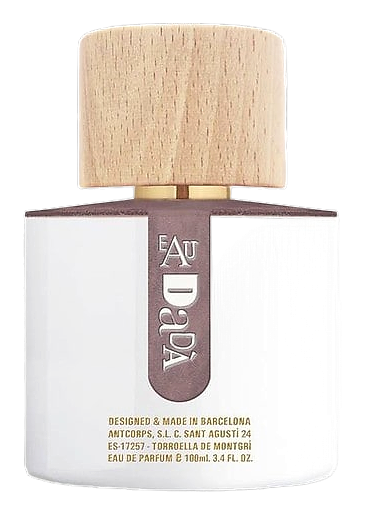
Dadaism ended nothing. It simply refused to begin. Tristan Tzara published manifestos, pillars of a movement built on provocation, on deliberate nonsense as critique. Somewhere, somehow, an eighth appeared. Santi Burgas found it. Or invented it. That's part of the joke. Eau Dada translates anti-art into anti-convention fragrance work, taking classical oriental structures and pulling them just slightly off-axis. The result is a scent that challenges expectations while remaining genuinely wearable. The bottle holds what the name promises: chaos that smells extraordinary, an olfactory contradiction that somehow coheres into something beautiful.
What makes Eau Dada unusual is its refusal to resolve cleanly. Most oriental-woody fragrances build toward a single conclusion, warm, sweet, familiar. Here, the saffron opens with a dry, almost medicinal earthiness that doesn't apologize for itself. The oud doesn't dominate; it grounds. The vanilla doesn't candy the composition; it dries down into something austere. Orange blossom arrives mid-development like a sudden clarity, a moment of light through incense smoke. The structure reads like a composition that knows it's being watched, and doesn't care.
The evolution
The first thirty minutes belong to saffron and patchouli together, earthy, slightly sharp, resinous without being heavy. It reads medicinal at first. Then the orange blossom emerges, clean and bright against the resinous backdrop, like finding a pressed flower in an old book. The oud settles into the skin during the second hour, working alongside the labdanum to create a warm, smoky foundation. Bourbon vanilla arrives later, not as sweetness but as dryness, the drydown smells like vanilla pod, not vanilla extract. What remains is close skin scent: patchouli, resin, and the ghost of saffron. The fragrance develops in waves, each hour revealing a new layer while retreating from the one before, creating a dynamic experience that rewards patience and close attention.
Cultural impact
Eau Dada belongs to the White Collection, placing it in conceptual niche territory where fragrance intersects with artistic philosophy. The Dadaist inspiration makes it more likely to appear in conversations about fragrance as art than as everyday wear. For those who seek something beyond conventional perfumery, Eau Dada offers intellectual engagement without sacrificing wearability, a scent that provokes thought while remaining genuinely pleasant to wear.