
The Story
Why it exists.
The beginning
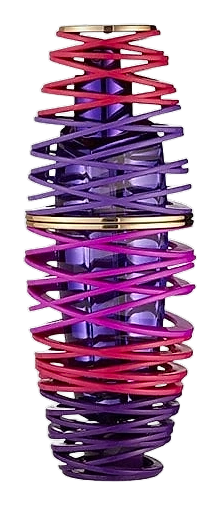
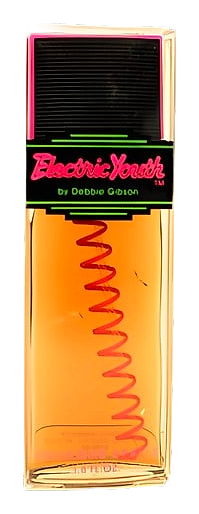
Debbie Gibson released 'Electric Youth' as an album in 1989, a platinum record that topped charts and captured the synth-pop energy of the decade. Revlon, already known for demographic intuition in beauty, saw the moment. A celebrity fragrance tied to a music brand was still relatively novel, Gibson wasn't just lending her name, she was lending her audience's identity. The fragrance arrived at the height of her fame, carrying the same bold accessibility that made her music resonate.
What makes the composition interesting isn't any single note, it's the ratio. Fruity sweetness dominates the top, but amber and wood anchor it in a way that keeps it from becoming simple candy. The synthetic quality that shows up in reviews isn't a flaw; it's structural. It gives the fragrance its longevity and its character. Without that slightly constructed edge, it wouldn't hold the way it does. The vanilla in the base doesn't read as gourmand, it reads as warmth, the warmth of a room that smells like the person you want to be when you grow up.
The evolution
The opening hits fast, plum and raspberry arrive together, sweet and immediate, with a brightness that feels almost electric in the literal sense. There's a sharpness here, a synthetic edge that lasts about twenty minutes before the florals begin to surface. The heart is where it softens. The sweetness doesn't disappear, but it becomes less aggressive, more like a memory of the opening than the opening itself. By hour two, the amber and wood are fully present, grounding everything that came before. The drydown is warm, slightly powdery, with vanilla that lingers close to the skin. On fabric, it lasts well into the next day, the kind of longevity that made people reach for this bottle repeatedly.
Cultural impact
Electric Youth exists in a specific cultural pocket, the late 80s, the early fragrance celebrity boom. It's a scent that Gen Xers associate with a particular version of themselves, which makes it difficult to evaluate on pure olfactory terms. The people who love it don't evaluate it at all. They recognize it. For younger wearers discovering it now, it reads as a time capsule: sweet, synthetic, unmistakably of its moment. That gap between nostalgia and discovery is where its current cultural life lives.