The Story
Why it exists.
The beginning
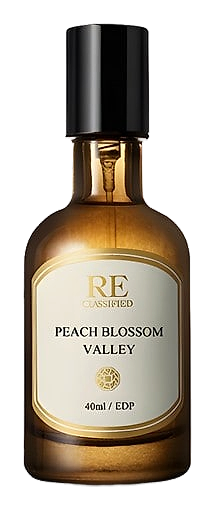
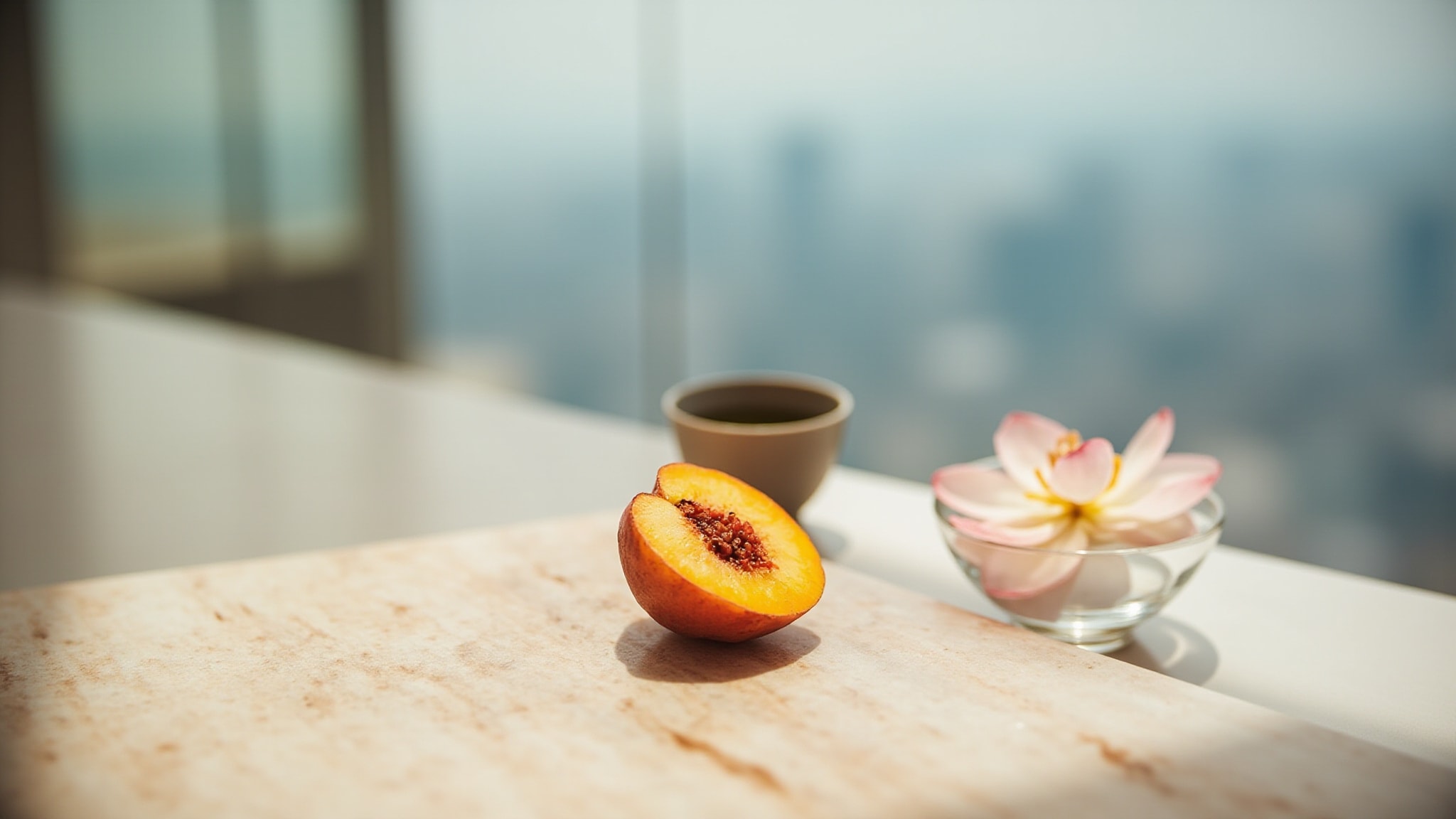
Peach Blossom Valley takes its name from 桃花源记, the ancient Chinese fable written by Tao Yuanming in the 4th century. The story goes like this: a fisherman drifts up a river, finds a hidden valley carpeted in peach blossoms, and stumbles into a society untouched by the outside world. He leaves. He tries to return. He never finds it again. The valley becomes an idea, a rest for weary souls, somewhere that exists if you know where to look. That's what this fragrance was made to capture: not the idea of escape, but the sensation of finding something you didn't know was missing.
What makes Peach Blossom Valley interesting is what it doesn't do. Most fruity fragrances lean into sweetness until it becomes syrupy, overwhelming, and exhausting within an hour. Here, the peach opens bright and almost sharp, a fruit bitten into rather than admired from a distance. The green tea and lotus that follow pull the composition toward something quieter, almost contemplative. They don't amplify the sweetness; they create space around it. The musk base never announces itself. It simply keeps the whole thing warm and close to skin for hours. It's a sanctuary composition, all the softness of spring without any of the noise.
The evolution
The opening hits fast and clean. That bergamot-peach burst is immediate, crisp fruit skin, the sweetness of flesh just beneath. No hesitation. For the first twenty minutes, it's as bright as a spring morning in a orchard. Then the handoff happens. The bergamot recedes. The green tea arrives quietly, almost meditative, and the lotus adds a soft aquatic lift that keeps the sweetness from cloying. It doesn't feel like a different fragrance, it feels like the same one, but thoughtful. By hour two, the drydown settles in. Musk and a faint powdery warmth stay very close to skin. Not projecting. Not demanding. The kind of presence that someone standing beside you notices before someone across the room. On fabric, the green tea lingers overnight, a ghost of blossoms on a cotton sleeve.
Cultural impact
The name Peach Blossom Valley draws directly from Tao Yuanming's fourth-century allegorical creation, one of the most revered texts in Chinese literature. That story describes a fisherman who stumbles upon an idyllic hidden community cut off from the outside world, living in perfect harmony. The concept has become shorthand in Chinese culture for an unspoiled refuge, a place of uncomplicated peace. Contemporary designers working with Chinese cultural references frequently invoke this imagery when they want to suggest escapism and simplicity without turbulence. In perfumery, attaching this literary weight to a fragrance implies the scent offers a similar kind of mental withdrawal.