The Story
Why it exists.
The beginning
The Ultraviolet collection arrived in 2005 as Rabanne's continued exploration of contrast and sensory tension. Where other houses pursued smooth, unified compositions, Rabanne built fragrance architecture the same way it built fashion: with deliberate structural stress between elements. The Fluoressence variant placed white florals against a warm vanilla-sandalwood base, using pink pepper and pink grapefruit to bridge the cool and warm halves. The goal was not a floral that smelled sweet from start to finish, but one that moved between registers, bright at the opening, velvety in the heart, intimate at the close.
The osmanthus-lily pairing is the quiet anchor of this composition. Osmanthus carries a distinct apricot-peach warmth that reads almost like honey, while lily keeps the floral heart from becoming too dense. Pink pepper functions as a connective tissue rather than a star note, it brightens the grapefruit without competing with the florals, and it adds a subtle spice that extends the opening's energy into the heart. The vanilla-sandalwood base does not arrive all at once. It builds slowly, replacing the florals rather than layering over them, which gives the drydown a clean transition rather than a cluttered one.
The evolution
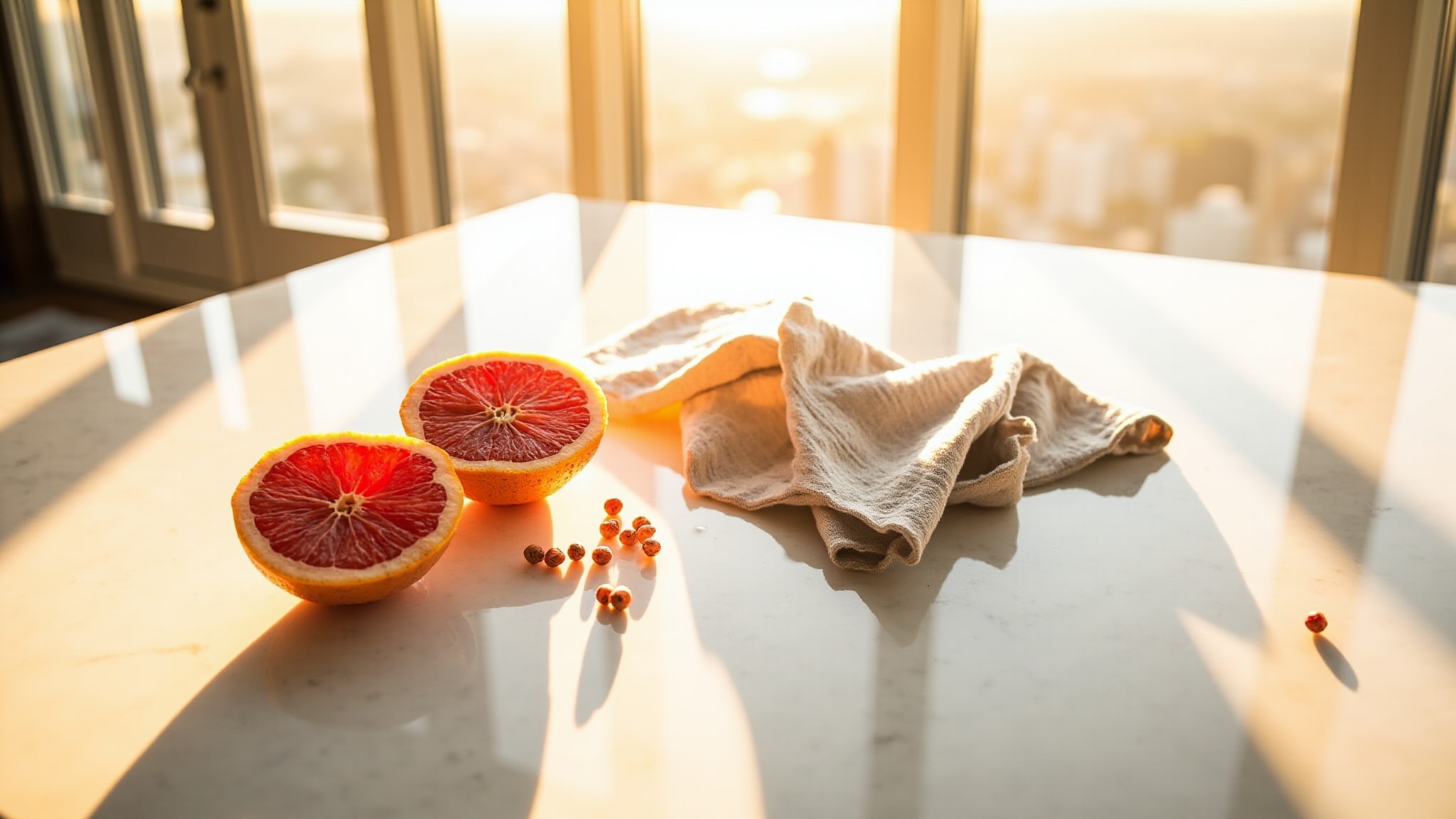
The opening hits immediately. Pink grapefruit and pink pepper arrive together, the citrus sharp and tart, the pepper softening the edges. This phase reads bright and modern, a quick, confident gesture rather than a slow introduction. It lasts roughly thirty minutes before the florals begin to assert themselves. The osmanthus appears first, bringing its apricot-like warmth into the composition, followed closely by lily. The transition is smooth but unmistakable, the tart citrus warmth of osmanthus gradually overtakes the grapefruit until only the florals remain. The vanilla and sandalwood arrive last, working in tandem to extend the fragrance's presence on skin. The sandalwood adds a creamy woody depth; the vanilla adds sweetness and warmth. By the final hour, only these two remain, intimate, close, almost skin-like. Six to eight hours is the average. On fabric, the sandalwood will hold until the next day.
Cultural impact
Released in 2005, Ultraviolet Fluoressence entered a market that was beginning to rediscover orientals after years of aquatic and fresh domination. Its particular appeal was the accessible floriental structure, bright citrus top, warm vanilla base, moderate projection, that read as modern without being challenging. The fragrance found its audience quietly, without the cultural noise that surrounded Rabanne's later blockbuster flankers, and has maintained a steady presence among those who prefer their florals complex and their vanilla close to the skin.