The Story
Why it exists.
The beginning
The Petit Trianon occupies a singular place in the history of French perfumery, an estate associated with Marie Antoinette and a tradition of scented domestic life that ran far deeper than the grand ceremonial airs of the royal court. The queen's personal perfumer, Fargeon, kept detailed ledgers of the materials supplied to the Trianon, and those records reveal a surprisingly gentle, garden-centered palette. Sources name violet, jasmine, lily, and tuberose among the flowers cultivated and used in scented preparations at the estate. There is no record of heavy orientals, no animalic base notes, and certainly no smoky resins dominating the queen's private perfume collection. The materials were delicate, floral, and intended for an intimate setting rather than a throne room.
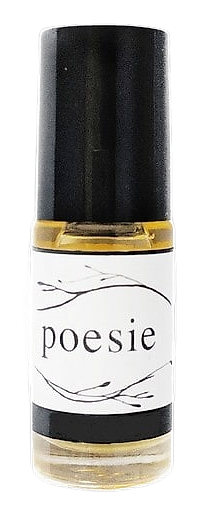
Poesie drew on that intimate, domestic side of 18th-century French perfumery when building Petit Trianon. Rather than building from heavy animalic or rich amber constructions, the formula leans into the lighter white-flower materials a private garden would actually provide: violet, jasmine sambac, tuberose, and the cool, waxy impression of Madonna lily. There's an intentional softness to the construction, an absence of the boozy, smoky, or aggressively sweet notes that often dominate historical perfume reconstructions.
The evolution
Poesie is an independent perfume house built around a literary sensibility, with a catalog that draws heavily from poetry, fairy tales, and historic women. The brand has expanded over the years from its early days into a wider selection of EDPs and accompanying bath products, while keeping a tight focus on affordable blends with devoted followings. Petit Trianon emerged during a period when the catalog was broadening its scope, offering fans more developed floral compositions with clear historical inspiration alongside the house's signature atmospheric and single-note experiments. The fragrance fits into a larger Poesie pattern of building scents around places, books, and figures from history, think libraries, ballrooms, and storied women, and presenting them in formats that invite daily wear rather than careful hoarding.
Cultural impact
The real-life Petit Trianon has been a touchstone of pop culture for over a century, a site that continues to capture the imagination of filmmakers, novelists, curators, and perfumers alike. The estate has appeared in costume dramas, museum exhibitions, and biographies that frame the queen as either a doomed romantic or a symbol of aristocratic excess, and the visual language of the Trianon, its gardens, its neoclassical architecture, and its associations with private theatricals, has seeped into everything from fashion editorials to contemporary novels.