
The Story
Why it exists.
The beginning
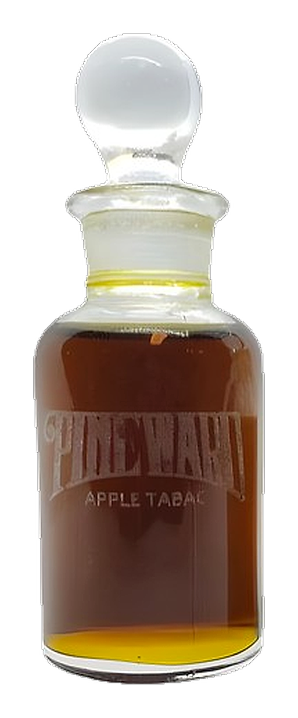
Apple Tabac exists because the name was the brief. Nicholas Nilsson had been building Pineward's forest-forward catalog, fir needles, juniper, fog-shrouded pines, but somewhere in the planning sat a question: what happens when you step out of the trees and into the orchard at the edge of the property? That's where this fragrance lives. Not deep woods. The borderland. Where conifers meet cultivated fruit, where the air turns sweeter but the earth is still rocky and dark. The apple had to be red and crisp, the kind that snaps. The rum had to feel like something poured, not imagined. The tobacco had to arrive on time, not dominate the opening. So Apple Tabac became a composition about arrival, stepping into warmth from cold air, the moment before the fire gets built.
What makes this structure interesting is the hand-off. The apple doesn't slowly fade, it holds center stage for the first two hours, present and photorealistic, while rum threads underneath providing warmth without sweetness. Then, almost imperceptibly, tobacco begins to assert itself. Not replace the apple entirely. Just... deepen it. The sweetness becomes something warmer, more caramelized, as if the fruit is slowly cooking down while you wear it. Fir balsam in the base isn't a prominent note so much as an anchor. It keeps everything grounded in something evergreen, something that smells like the mountain air that probably surrounds whoever's wearing this.
The evolution
The opening announces itself immediately. Red apple, crisp and realistic, no synthetic edge. Underneath, the rum provides warmth, not sharp, not alcoholic, just present. For the first thirty minutes you're in full orchard mode. Then the transition begins. The apple doesn't leave. It deepens. The rum amplifies slightly, taking on a caramel quality as the tobacco note starts to surface. By hour two, you've entered the heart: apple and tobacco in conversation, neither dominating, both present. The dried fruits add body here, a subtle sweetness that prevents the tobacco from reading harsh. This middle phase is where Apple Tabac earns its reputation, it's not linear sweetness, it's a slow burn toward warmth. Then the drydown arrives and stays. Fir balsam emerges as the dominant anchor, pulling everything toward the evergreen, the forest edge, the place where this fragrance's siblings live. Tobacco remains but transforms, less leaf, more resin. The whole composition settles into something warm, persistent, and close to skin.
Cultural impact
Apple Tabac occupies an interesting position in the fall fragrance landscape: sweet enough to satisfy the mass-market autumn appetite, distinctive enough to avoid candle territory entirely. The fragrance has found its audience among people who want seasonal weight without committing to heavy ouds ororientals. What distinguishes it from comparable releases is the fir balsam grounding, it keeps the sweetness honest, prevents the composition from floating away into pure sugar. Wearers describe it as the scent of someone who walked through an orchard on a cold evening and came in smelling like the whole season.