The Story
Why it exists.
The beginning
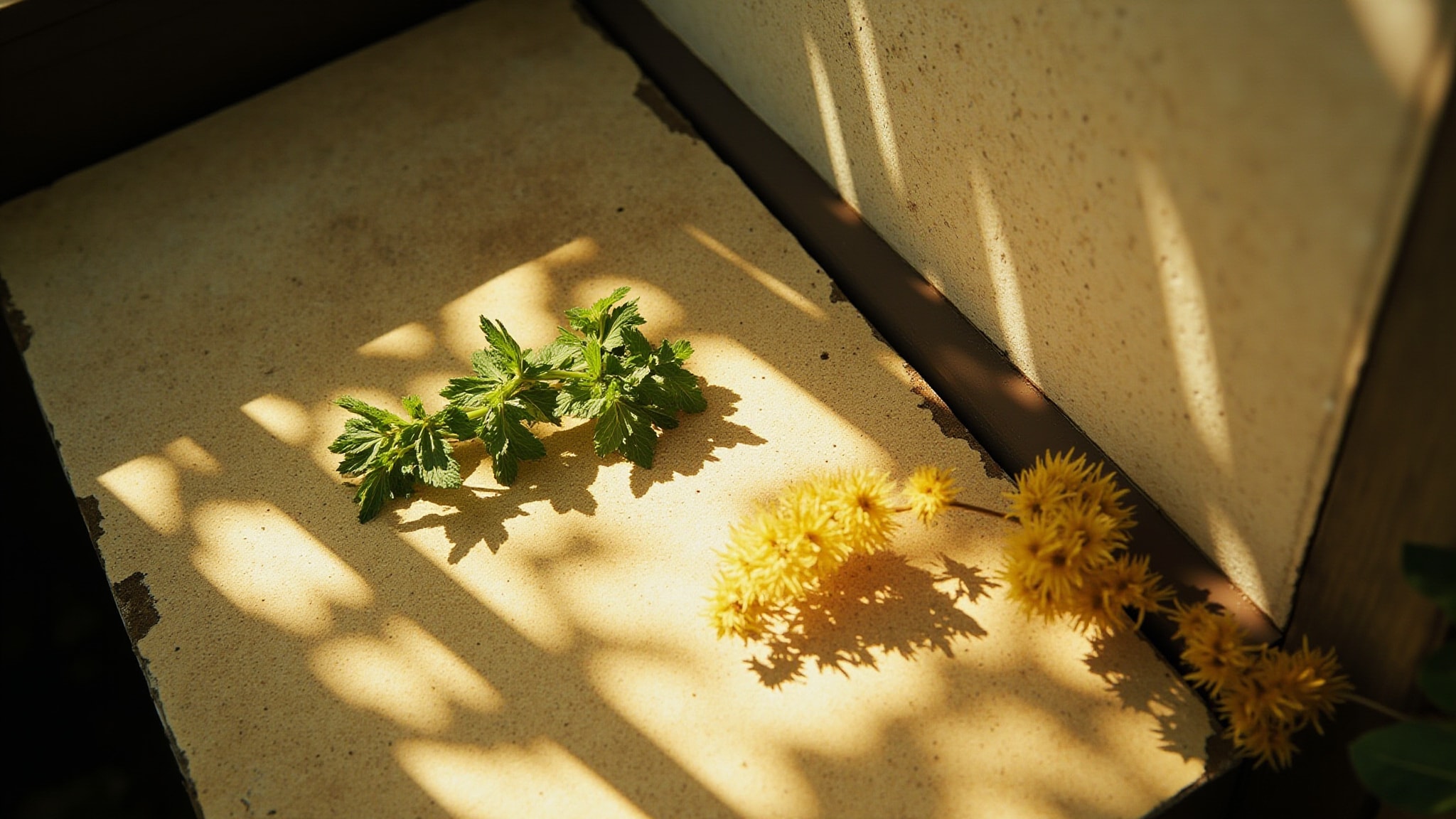
Komorebi is a Japanese word for sunlight filtering through leaves, that specific moment when the sky becomes geometry, dappled and shifting. Pierre Guillaume took this idea and asked: what does that actually smell like? Not a forest in general, but the light itself moving through it. The answer lives in mint and reseda, in the green quiet of a woodland clearing at noon.
The structure here is built on contrast, mint's sharp freshness against mimosa's powdery softness, blackcurrant's juicy bite tempered by woody depth. Hazelnut absolute is unusual in mainstream perfumery; here it adds a warm, slightly toasted nuttiness that bridges green and sweet without tipping into gourmand. Tonka rounds the base with coumarin's signature hay-like warmth, keeping everything grounded and intimate rather than bright or projecting.
The evolution
The opening hits like crushed mint leaves in the palm, cool, green, immediate. Within twenty minutes the blackcurrant emerges, adding a jammy fruitiness that softens the sharpness. The heart belongs to mimosa: powdery, slightly honeyed, undeniably floral. This is where most fragrances in this style stay, but Komorebi keeps evolving. The hazelnut surfaces in the drydown, warm and almost edible, before oak takes over as the dominant force, not sharp or pencil-like, but soft and rounded, like sun-warmed bark. The tonka lingers longest, a quiet sweetness that stays close to the skin well past the six-hour mark on most wearers.
Cultural impact
Komorebi 9.1 by Pierre Guillaume Paris embodies the Japanese concept of sunlight filtering through leaves, translating a meditative natural moment into olfactory form. Released in 2018, this fragrance occupies a unique niche within the niche fragrance landscape, a green, woody, floral composition that speaks to the intersection of Japanese cultural aesthetics and French perfumery. The house, founded by Guillaume in 2005, has consistently explored the boundaries between natural imagery and sensory interpretation, with Komorebi 9.1 representing a particularly refined expression of this artistic philosophy.