
The Story
Why it exists.
The beginning
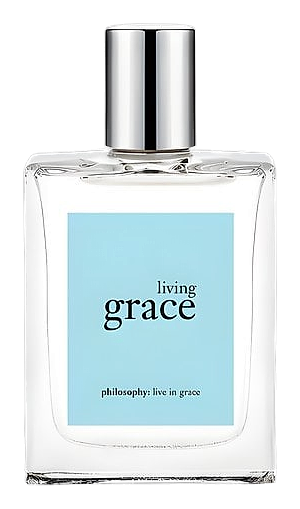
Living Grace arrived in 2012 as part of Philosophy's Grace collection. The name itself carries intent: grace as an intuitive state, not an effort. What distinguishes Living Grace within that lineage is its clarity. The fragrance asks what the cleanest possible expression of that Grace concept actually smells like, and answers with something barely there, in the best sense. The three core materials, lily-of-the-valley, neroli, and musk, work together to create a scent that feels immediate and honest. Lily-of-the-valley brings a delicate, green floral accent that opens bright and clean. Neroli adds a subtle citrus-like sweetness that keeps the composition from feeling heavy. Musk anchors the whole experience with a soft, skin-like warmth that binds everything together without overwhelming.
Three notes is an act of restraint in a category that often rewards abundance. Lily-of-the-valley is notoriously difficult to render faithfully, the gap between its natural scent and its synthetic reconstruction can be wide. The material here leans into that characteristic dewy-green freshness, the kind that reads as morning rather than floral. Neroli adds a delicate citrus-floral sweetness that stays quiet, never tipping into indolic territory. Musk provides the foundation: not animalic, not loud, but skin-close. Together they create a composition that functions less like perfume and more like an enhanced version of naturally clean skin.
The evolution
The opening hour belongs to lily-of-the-valley and neroli working in tandem, aquatic, fresh, the kind of clean that smells like something just happened rather than something being announced. At the thirty-minute mark, the fragrance begins its pivot inward. The neroli softens. The musk emerges, not as a statement but as a warmth that reads as skin rather than scent. By the second hour, you're approaching the wearer before the fragrance announces itself to anyone else. The drydown around hour four is all musk, intimate, close, the kind of presence that requires someone to lean in. On fabric, a ghost of green lingers into the next morning.
Cultural impact
Living Grace found its audience in the space between performative fragrance and skin-close subtlety. It never dominated a room or generated the buzz of its Grace siblings, but it developed a quiet loyalty among wearers who wanted exactly that, presence without projection. The fragrance was discontinued several years ago, which has only sharpened its appeal among those who remember it and those discovering it through resale. In the broader landscape of clean-fresh fragrances, it occupies a specific niche: not the soapy cleanliness of bar soap, but something more personal and considered. It asks less of the wearer than it gives.