The Story
Why it exists.
The beginning
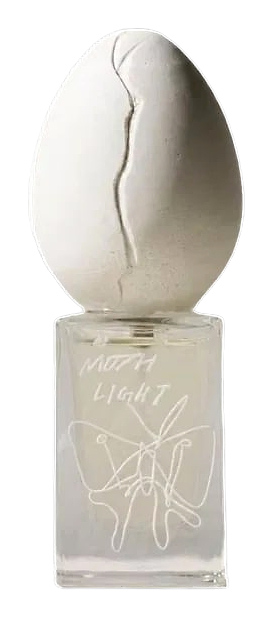
Mothlight draws its name from the experimental film by Stan Brakhage, a work of cinema built from raw organic matter fused directly onto celluloid, bypassing the camera entirely. The resulting flicker feels less like watching nature and more like being inside it, fragments of fragile life rendered as pure light. Perfume Who took that premise and poured it into a bottle, attempting to capture things drawn toward brightness despite being built for the dark. The perfumer, Yung-Han (Hannah) Wu, built the composition around that central tension, asking what a scent might do if it behaved less like decoration and more like exposed film stock, brief, damaged, impossibly alive.
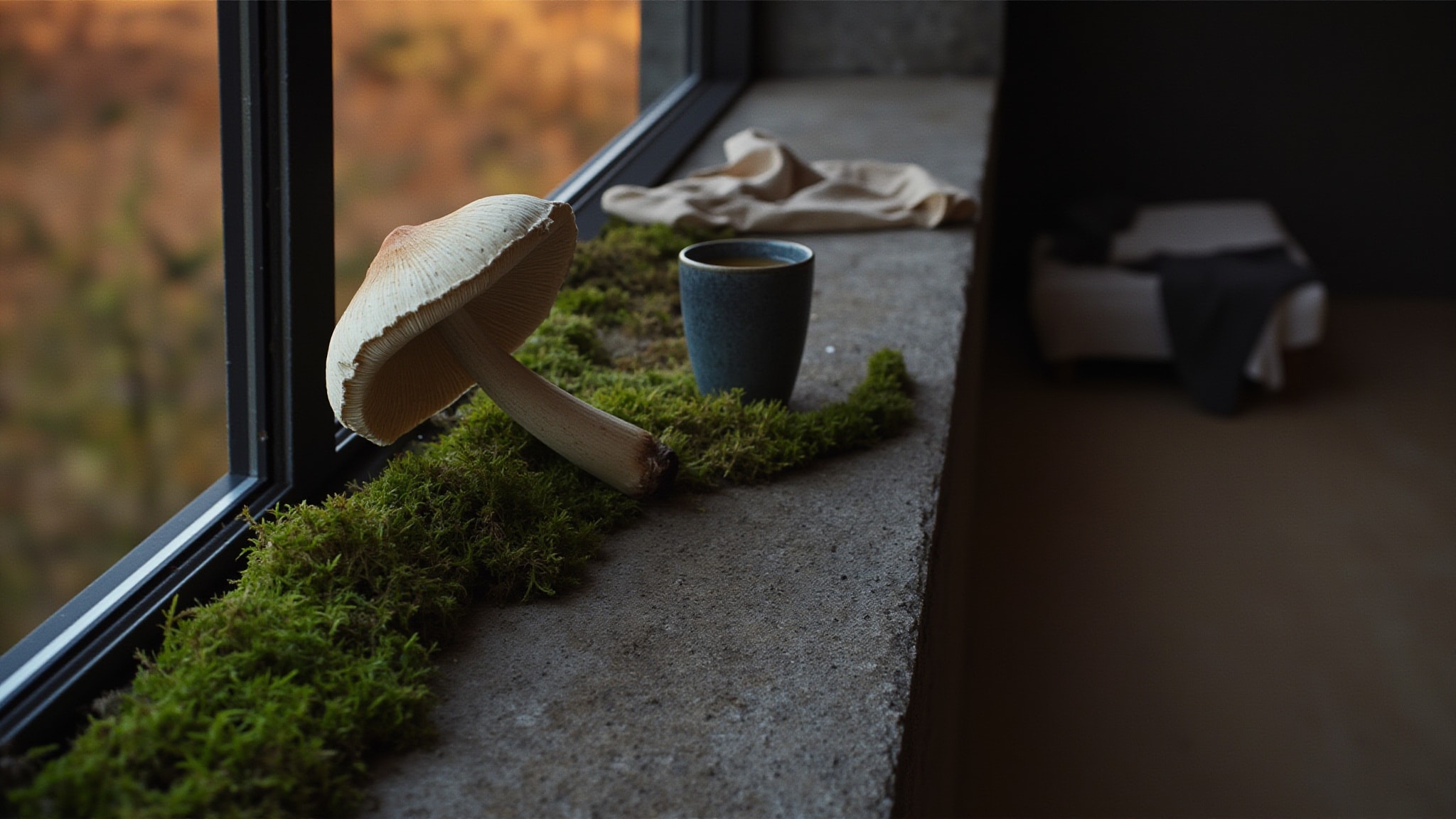
The choice of matsutake in the heart is the structural risk. It's a savory, almost fungal note that can read as raw, earthy, or simply strange on skin, depending on the wearer. Rain accord sits above and tree moss below, creating a layered composition of dampness running through the entire structure. Here the matsutake stands almost alone, framed by neroli above and a base of musk and sandalwood that grounds the whole thing in skin-warmth rather than forest-floor rot. The composition refuses to soften what makes it challenging.
The evolution
Neroli opens with that soft, watery citrus thing while the rain accord sits underneath like a held breath. Then something shifts. The neroli fades but doesn't disappear, and the matsutake arrives with its earthy weight. It can feel jarring on first encounter, less perfume, more petrichor with a pulse. Over time the composition softens. Tree moss and sandalwood take over, and the whole thing settles into something quieter, less demanding. The musk holds longest, carrying a faint animal warmth well into the later hours of wear. By morning it's barely there, a whisper on the inner wrist. The transition from opening to close feels like watching light change through a single afternoon, bright citrus giving way to deep fungal earth, then settling into the intimate warmth of skin and wood.
Cultural impact
Mothlight's Brakhage reference places it in conversation with a small lineage of artistic-cinema-inspired perfumery, works that treat scent as textural memory rather than decorative accessory. The name does real work here, summoning a specific kind of avant-garde sensibility without needing to explain itself. Anyone familiar with Brakhage's practice recognizes the gesture immediately: art built from discarded matter, beauty pulled from what most would overlook. That framing matters because it sets expectations. This is not a crowd-pleaser wearing arthouse clothing. The matsutake-heavy heart confirms it.
The House
Perfume WhoPerfume Who is a fragrance house that speaks softly and lets curiosity lead the conversation. With no flagship scent yet catalogued in our archive, the brand reads as a blank page waiting for its first chapter. The intrigue is intentional. Who, exactly, is behind it? And what will they pour into the bottle?
The Creator
Yung-Han (Hannah) WuWu's signature lies in tension: transparency against density, softness against mineral sharpness, the familiar placed beside the unfamiliar. Natural absolutes and isolates appear alongside carefully judged synthetic molecules, chosen for what they bring to a composition rather…