
The Story
Why it exists.
The beginning
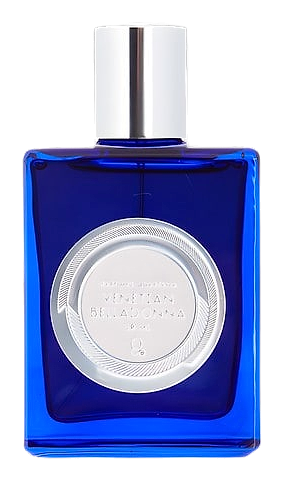
Venetian Belladonna takes its name from the plant that once made Venetian women beautiful and blind to their own danger, belladonna, dropped into the eye to dilate the pupil into something more beguiling. More unsettling. Pierre-Constantin Guéros and the house of Parfums Quartana built this fragrance around that tension: beauty that carries a warning in its name. The 2016 release belongs to the Les Potions Fatales collection, where every title suggests a potion with consequences. This one delivers them.
The composition earns its place in the collection. Beeswax and cognac together are unusual, waxy warmth meeting boozy depth. Suede threads through the heart, adding texture that most floral fruity fragrances never attempt. The result is a scent that becomes more interesting the longer you wear it, not less, a quality that separates niche work from commercial formulations.
The evolution
The opening announces itself in cool fruit, blackcurrant and plum arrive bright, violet water weaving through like cold air on a foggy morning. Cognac warmth threads underneath from the first minutes. That interplay between cool and warm defines the first hour. By hour two, the heart takes over. Beeswax and honey become the real substance of the fragrance. The cognac warmth remains, but suede appears beneath the florals, worn leather, skin-close texture. The jasmine and tuberose don't project as much as they deepen, becoming richer and more intimate. This is the phase where Venetian Belladonna earns its name. By hour three, the drydown arrives. The florals fade but leave an impression, tuberose creaminess, violets that linger as powdery warmth. Sandalwood and vetiver ground the composition. Patchouli adds earth. Styrax gives a sticky, almost resinous warmth that extends the honey note without heaviness. Hours later, you catch traces on your skin, a warm amber-violet memory, intimate and addictive.
Cultural impact
Venetian Belladonna arrived in 2016 as part of Parfums Quartana's Les Potions Fatales collection, a line designed to challenge mainstream perfumery conventions. Rather than chasing trend-driven scent profiles, the house built its identity on botanical materials and unconventional combinations. This release sits within a broader cultural moment where niche perfumery increasingly functions as a form of olfactory storytelling, where ingredients carry narrative weight rather than just olfactory function. The beeswax-cognac axis in particular taps into a revived interest in resinous, waxen textures that recall apothecary traditions and pre-synthetic perfumery.