
The Story
Why it exists.
The beginning
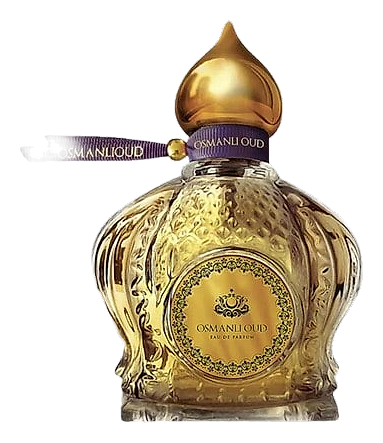
Reyhan sits inside Osmanli Oud's Lüks / Warrior collection, a line that draws its names from Ottoman history and natural heritage. The word "reyhan" itself means basil in Turkish, but the composition leans away from the herbal. Plum leads, apple follows, wood closes. A fruit-driven take on a house whose name literally centers oud, and whose broader catalog tends to trade in heavier, more resinous material. That friction is the point. Rather than reaching for smoke or deep resin, the perfumer here lets two fruits carry the weight while a woody base provides quiet architecture. The plum reads dark and rounded, not candied, with a density that suggests preserved fruit rather than fresh-picked.
What makes the pyramid worth a second glance is its minimalism. Three notes, three layers, no accord padding. The plum-to-apple transition is unusual: here the plum opens dense and slightly fermented, almost wine-adjacent, then the apple arrives not as a fresh crunch but as something softer, almost baked. The two fruits share territory, blurring at the edges rather than handing off cleanly, which gives the heart a velvety, continuous texture. The woody base does the structural work, holding what could have been a fleeting fruity composition into something with actual backbone.
The evolution
The opening belongs to plum, a dark and rounded sweetness with a slightly sticky, almost fermented quality. As the composition moves forward, the apple emerges, not sharp but mellowed, folded into the plum's sweetness so the two become hard to separate. There's something in the way these two fruits occupy the same space that feels intentional, like the perfumer wanted a single continuous fruit impression rather than two distinct ones. After the heart settles, the wood starts pulling focus. It's a warm, dry graininess that absorbs the fruit and turns it into something more grounded, less confectionery and more autumnal. The composition quiets considerably as it wears. What remains is a faint woody sweetness close to the skin, a low hum of grain and warmth that stays with you without ever projecting far.
Cultural impact
Reyhan represents a lighter approach within Osmanli Oud's catalog, a fruit-forward composition in a lineup otherwise defined by heavier, more resinous material. The name "reyhan" means basil in Turkish, and while the scent itself avoids anything overtly herbal, the naming choice speaks to how the house ties its work to Ottoman cultural references and natural vocabulary. The scent reads as something more everyday than ceremonial, the kind of composition you might reach for in warmer months or casual settings, without the gravity of the brand's denser offerings.