The Story
Why it exists.
The beginning
The Nota Paris Collection treats musical notes as a language. Do is the first, the foundation. The starting pitch. In Western solfège, it anchors everything that follows. Oscar London built the collection around this idea: that each fragrance could function as a note in a larger composition, distinct on its own but in conversation with the others. Do was designed to be that conversation's opening. The brief was simple in theory: tropical fruit with enough weight to last. The execution wasn't simple at all. Passion fruit and mango can read shrill in the opening minutes, too bright, too fleeting. The solution lived in the base. Labdanum and leather slow everything down. Vanilla and amber add warmth without sweetness. What arrives on skin is fruit that doesn't rush toward its own exit.
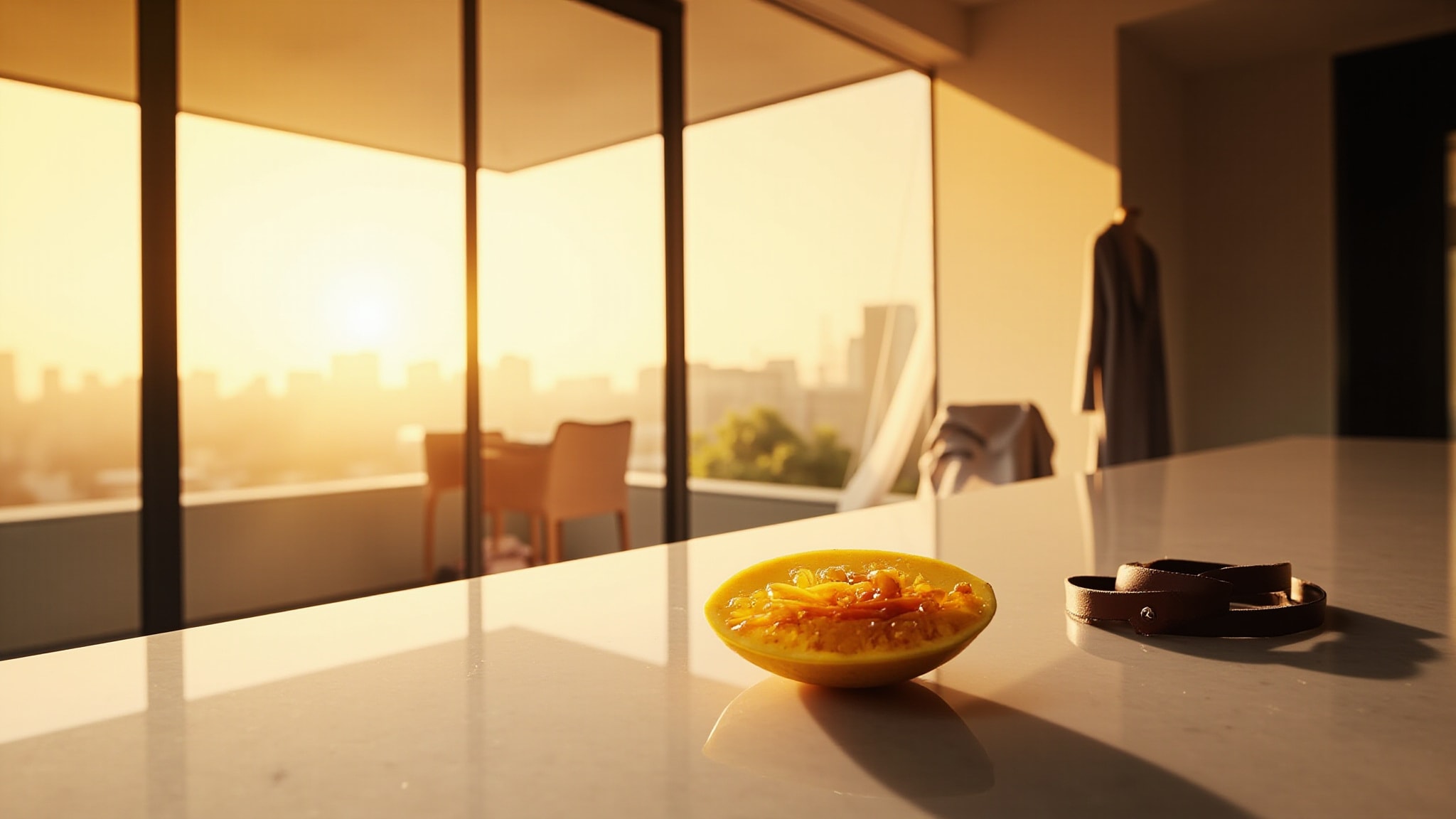
The pairing of mango and leather is unusual. Fruit usually wants lightness, air, movement. Leather wants gravity, stillness, presence. Bringing them into the same composition requires something that bridges the two, a material that can hold both without choosing sides. In Do, that material is benzoin. Its resinous warmth pulls the mango down into the leather without flattening the fruit's texture. Patchouli does similar work at the heart, adding an earthy depth that keeps the tropical notes from reading as synthetic or flat. The result is a fragrance that smells like two things at once. Not layered, exactly, more like a single impression that contains contradiction within it.
The evolution
The opening arrives fast. Saffron and passion fruit hit first, a burst of warmth that reads almost effervescent. There's no subtlety here, and that honesty is part of what makes it work. For the first fifteen minutes, the fragrance is loud, bright, unmistakably tropical. Then the mango moves in. It takes its time. The transition isn't dramatic, no sudden shift, no awkward handoff. Mango simply becomes the dominant note, displacing the passion fruit gradually, adding a rounder, sweeter quality that tempers the saffron's sharpness. This phase lasts the longest. Two to three hours of mango-forward warmth, with patchouli building underneath, pushing the composition toward earthier territory. By hour four, the leather emerges fully. Not the harsh leather of an opening, something quieter now, softened by vanilla and amber. The fruit is still there, but it's receded to a memory rather than a presence. Labdanum adds a faint resinous quality, a whisper of something darker. The drydown holds another two to three hours on most skin types. Vanilla and leather persist longest.
Cultural impact
Do enters a catalogue where each fragrance functions as a chapter in a larger story. The Nota Paris Collection, Mi, Sol, Fa, Do, Re, Si, treats musical notation as a naming system, and Do is positioned as the first note, the foundation. This framing shapes how the fragrance is received: not as a standalone release but as part of a conversation. Wearers familiar with the collection read Do as a statement of intent, the pitch around which everything else orients. The fragrance itself doesn't lean into the musical connection overtly, there's no literal interpretation of sound in the notes, but the name does suggest a certain confidence. The first note is the one that sets the key.