The Story
Why it exists.
The beginning
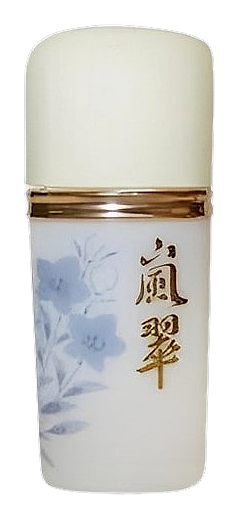
Ransui translates to the green mist that gathers above forested mountains, a Japanese term for something almost atmospheric. The fragrance was released in 1974 by Oppen Cosmetics. This is not a perfume designed to announce itself. It was composed for the wearer who already knows what she wants from a scent: clarity, restraint, the kind of green that feels less like a note and more like a memory of somewhere cool. The name does the heavy lifting before the bottle is even opened. Once it is, the mist arrives as advertised, settling close to the skin with an almost humid softness, as though the wearer has just walked down from a wooded ridge at dawn. There is a dampness to it that doesn't read as aquatic but vegetal, the scent of moss after rain rather than the rain itself.
What makes Ransui structurally interesting is its old-school cologne architecture working within a Japanese naming tradition. The composition follows a classic cologne structure, with brightness at the top giving way to herbal warmth in the heart and a quiet, dry foundation beneath. Nothing about it shouts. The opening moves quickly from a clean, sharp citrus lift into something softer and more aromatic, a green that has weight without heaviness. As the hours pass, the herbal quality warms slightly, picking up a faint spiced character that never tips into sweetness.
The evolution
On skin, the first ten minutes belong to neroli and citrus, bright enough to register but thinned rather than squeezed. There's a cologne clarity here, the kind that reads as clean without veering into laundry territory. By the thirty-minute mark the herbs step forward. A thread of clove warms the middle without sweetening it, and the composition starts to feel less like a splash and more like something deliberate. The green here is forest green, not grass green. Closer to moss than to leaves. Two hours in, the vetiver and oakmoss have taken over completely. What remains is dry, slightly earthy, and remarkably close to the skin. On most wearers this phase holds for the rest of the day, intimate rather than projecting, more like a second skin than a trail. By evening it's almost a whisper, but a confident one.
Cultural impact
Its appeal now is almost archival: a composition from 1974 that captures something specific about that moment in perfumery, when green fragrances still held a central place in mainstream wardrobes. The scent carries the particular clarity of mid-century cologne work, the kind of clean green that defined a certain kind of elegance before heavier, sweeter compositions became dominant. For those interested in the history of how fragrance has shifted across decades, it offers a direct line back to that earlier sensibility, preserved in amber rather than reimagined.