
The Story
Why it exists.
The beginning
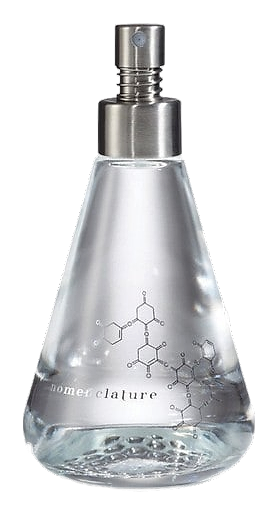
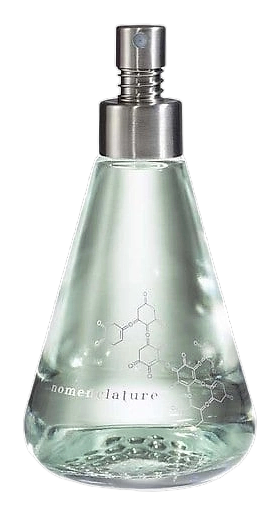
fluo-ral began with a molecule and a question: what if the 90s' most overused aroma chemical hadn't peaked yet? Calone was discovered by Pfizer chemists in 1965, buried in tranquilizer research until someone inhaled it and found something unexpected, sea-spray, green melon, a facet no one had mapped. Perfumers spent two decades learning its grammar. By the 90s, it was the signature of every aquatic fragrance that followed. The inspiration came from Jervis Bay, Australia, where bioluminescent plankton lights up the water at night. Those glowing organisms against the dark ocean offered an unexpected visual: luminescence pulsing through darkness, fluorescence meeting depth.
What makes fluo-ral unusual is its architecture: a bright molecule held in tension against dark materials. Calone's transparency gets amplified by rhubarb's tartness, blackcurrant bud's green bite, tomato leaf's vegetal edge. These aren't decorative. They're structural. They push the Calone brighter, forcing it into fluorescence rather than the soft aquatic it was designed to be. Then comes the counterweight. Somalian frankincense arrives with a dark, almost ink-like presence, its metallic facets catching the saline edges of the Calone and redirecting them rather than softening them.
The evolution
The opening announces itself immediately: rhubarb's tartness cuts first, sharp and almost acidic, followed by blackcurrant bud's green bite and tomato leaf's vegetal edge. The Calone doesn't hide, it surfaces through these green notes like light through water, its sea-spray facet visible but not dominant. For the first thirty to forty-five minutes, the fragrance reads as bright, almost aggressively fresh. Then the hand-off. The green notes begin to settle, and the Somalian incense arrives, not gradually, but as a distinct phase shift. The dark, almost smoky quality of the frankincense takes over the top registers, and the Calone's salinity becomes more pronounced, mixing with the incense like tide pools at night. The rose in the heart is subtle, more of a softening agent than a statement. The drydown is where it earns its name. As the bright green notes fade, what remains is Calone's transparent marine quality floating over Somalian incense's dark residue, bioluminescent plankton in ink-dark water.
Cultural impact
fluo-ral occupies a specific position in the Nomenclature catalogue: the radical reinvention of a molecule everyone thought they understood. Calone had become wallpaper, the generic aquatic note in drugstore fragrances, the safe marine in designer launches. Feisthauer's decision to rebuild it from scratch, forcing it into fluorescence against dark incense, was a statement about what happens when you treat a known material as unexplored territory. The fragrance attracts a specific wearer: someone interested in the architecture of scent rather than its comfort. Nomenclature's audience, scientifically curious, finding poetry in molecular precision, gravitates toward compositions that teach something.