The Story
Why it exists.
The beginning
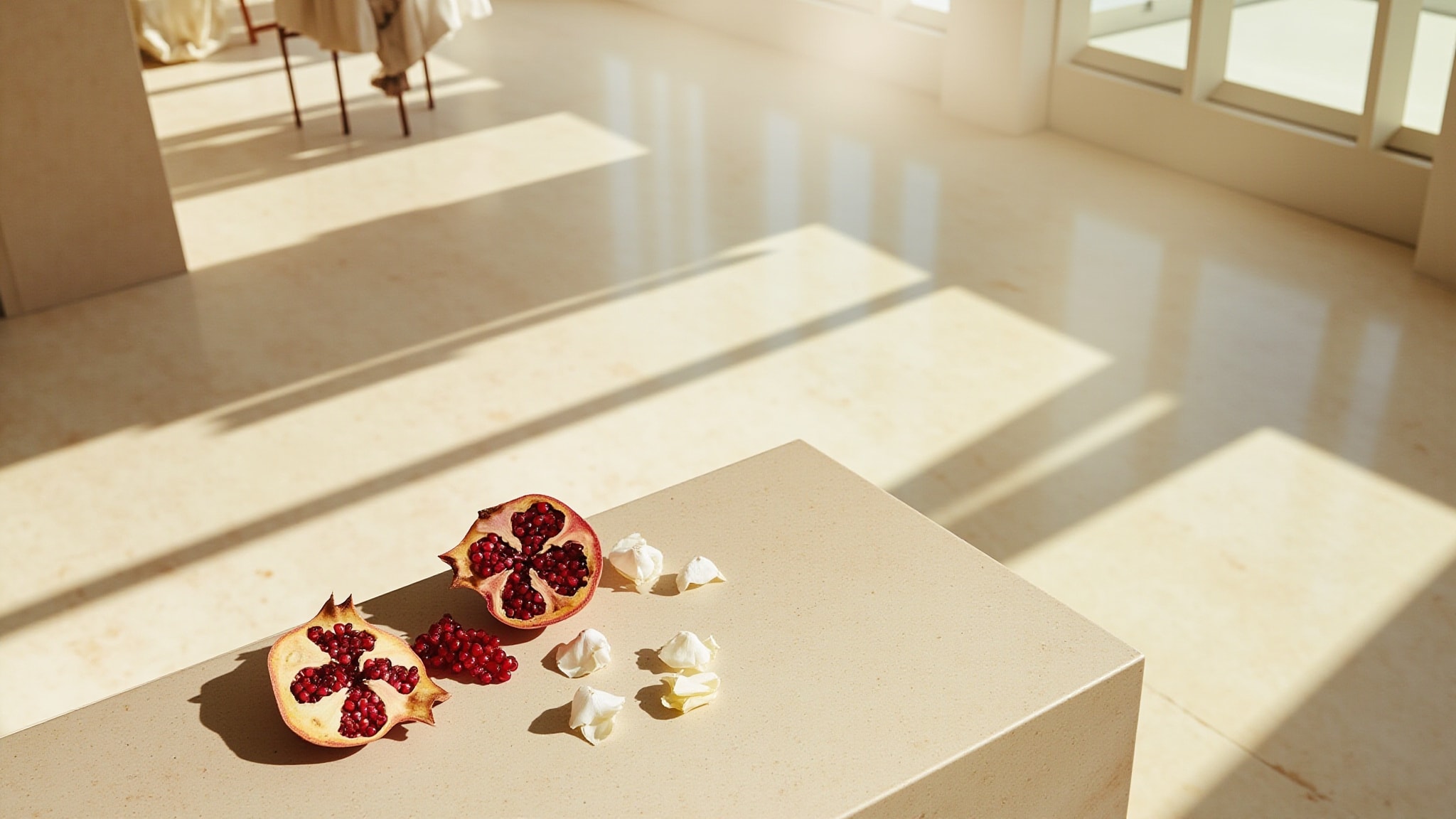
Romã e Flor de Amora arrived in 2024 as part of Natura's broader collection, taking its name from two ingredients native to the Brazilian landscape. Pomegranate carries centuries of cultural weight in South America, valued for its brightness and its seeds scattered symbol by symbol. Blackberry blossom is quieter, less celebrated, the kind of note that takes patience to appreciate. The pairing was intentional: a fruit that bites and a flower that soothes, held in conversation by the house's naturalist philosophy.
What makes this structure interesting is the ratio. Pomegranate doesn't arrive and leave quickly here, it hangs, refusing to be dismissed as a fleeting opening act. The blackberry blossom and jasmine then emerge not as a sharp transition but as a gradual softening, as if the tartness itself is dissolving into something warmer. Caramel at the base isn't a heavy dessert note. It's the quiet underneath, present without announcing itself. The architecture rewards patience rather than demanding an immediate impression.
The evolution
The opening sprays bright and almost electric, pomegranate at its most alive, the kind of tart that makes your mouth water for a split second before the sweetness catches up. There's a fresh-spicy edge that reads as green, stemmy, not synthetic. Within fifteen minutes, the jasmine arrives and the whole composition shifts register. It becomes softer, more intimate, the blackberry blossom adding a quiet sweetness that doesn't compete with the pomegranate so much as wrap around it. The transition isn't dramatic, it's the feeling of a room warming up when someone closes the door. By the second hour, caramel takes over the narrative. The florals recede but don't disappear; they linger like a memory of the opening rather than a repeat of it. The drydown sits close to skin, intimate, the kind of presence that someone standing beside you will notice before you do. On most skin types, expect four to six hours, not a marathon, but a full afternoon.
Cultural impact
As a 2024 release, Romã e Flor de Amora enters a fragrance landscape that has fully embraced the fruity-floral category but often defaults to heavier interpretations. This one leans lighter and more honest, pomegranate's tartness keeps it from becoming another caramel-jasmine wallflower. The Brazilian botanical angle gives it a point of origin that feels specific rather than aspirational.