

The Story
Why it exists.
The beginning
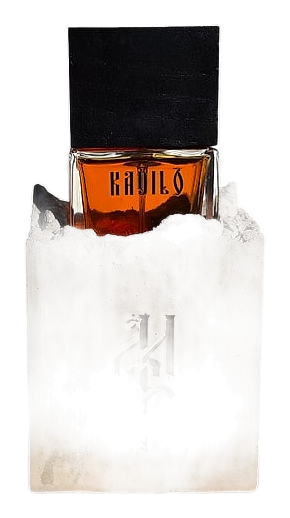
Kadilo is built around a vivid Orthodox church atmosphere, where incense hangs in the air and smoke passes through wax and related materials. Alexandra Kodintseva composed the fragrance for 2026, turning that setting into an eau de parfum with a warm, spicy, balsamic center. Its church inspiration is sensed through the materials of incense, smoke, and wax rather than reproduced as a literal architectural copy. Frankincense and myrrh establish the resinous core, while benzoin, labdanum, and beeswax add warmth and sweetness beneath the smoke. The result feels ceremonial without becoming costume-like, and that balance is where Kadilo becomes its own thing.
The unusual part is the cast of materials gathered around the church atmosphere. Frankincense and myrrh bring resinous, incense-like depth, while benzoin and labdanum add warmth and a faint sweetness beneath the smoke. Beeswax gives the composition a tactile, candle-lit quality. Cedar and woody notes ground the ritual feeling, while juniper introduces a herbal accent among the heavier materials. Dust and mineral amber contribute further texture to the church-inspired composition, giving smoke a denser, more material character as the different notes meet and settle into a warm, balsamic whole.
The evolution
Kadilo begins with an impression of moving air, as incense, juniper, dust, and smoke establish the opening before the heavier materials settle in. Frankincense and myrrh bring a resinous depth, while benzoin, beeswax, and labdanum gradually turn the composition warmer and more tactile. Cedar and woody notes give it a steady base, keeping the sweetness grounded. As the hours pass, the church impression becomes less about a specific place and more about the trace it leaves on skin: a softened blend of smoke, wax, dust, and mineral warmth. The materials move from a direct impression of incense toward a quieter, resinous blend.
Cultural impact
Kadilo draws on the atmosphere of an Orthodox church through incense, smoke, wax, and related materials. Its church-inspired concept invites attention to how a fragrance can evoke ritual, texture, and memory through scent. The composition balances ceremonial materials with a contemporary presentation, making the atmosphere something to explore on its own terms rather than simply a decorative reference.
The House
MUTABORMUTABOR is a fragrance house shaped by one of the great turning points in European history. Its name points to 1805, the Battle of Austerlitz, remembered as the Battle of the Three Emperors. The name gives the house a distinctive historical character, but the supplied material does not yet establish its founding date, origins, or current collection.
The Creator
Alexandra KodintsevaNo fragrance credits, formula notes, ingredient preferences, or working methods are verified for Alexandra Kodintseva in the available research. It would be speculative to describe her as favoring botanicals, synthetics, chypre structures, soliflores, or any other established…