
The Story
Why it exists.
The beginning
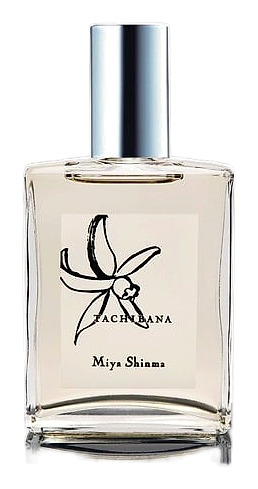
Tachibana is named for the wild orange blossom, a bright citrus note that carries both tartness and a quiet complexity. The fragrance centers on yuzu as its luminous core, paired with the grounding breath of wood notes and an immaculate quality at its heart that feels naturally beautiful without needing enhancement. Shinma Miya created this scent as part of her broader exploration of Japanese botanicals and how they translate into a different context, in this case her home and studio in Paris. The result is a yuzu fragrance that doesn't approach citrus the way Western perfumery typically does. It arrives with clarity, maintains an honest character throughout its development, and the vetiver at the base remains present, providing depth that lingers beneath the surface notes.
What makes Tachibana interesting as a composition is its restraint. The pyramid is deliberately sparse, one representative ingredient at each level rather than a chorus of complementary notes. The structure places yuzu as the citrus voice, mandarin orange blossom as the floral voice, and Haitian vetiver as the woody voice. Each note does exactly one thing and does it clearly. The green-bitter freshness of the opening is not a trick, it's the fragrance itself. The animalic undertone in the base is not hidden, it's simply patient, arriving late and staying close to the skin.
The evolution
The opening announces yuzu without apology, tart, bright, almost astringent. It doesn't bloom so much as arrive. Within minutes, the mandarin orange blossom enters quietly, neither sweet nor heavy, carrying a clean floral note that reads more botanical than romantic. The vetiver is present from the start, a green-earth undertone that prevents the citrus from reading as superficial. The drydown is where Tachibana earns attention. The musk builds as a second-skin warmth, the amber adds quiet depth without sweetness, and the vetiver lingers as a final voice, earthy, slightly smoky, intimate. This is the part that stays. The sillage is moderate, projecting gently rather than filling a space, and it remains close and present throughout its wear, becoming quieter in the final stages but never fully disappearing.
Cultural impact
Tachibana occupies a specific corner of niche perfumery, the citrus fragrance that doesn't perform citrus. In a category often dominated by fresh, bright, and aggressively versatile compositions, Tachibana commits to restraint as its primary identity. The yuzu opening is not a courtesy; it's the point. The fougère structure, with its green-earth vetiver backbone, places it closer to aromatic fragrances than to the sweet-citrus mainstream. It's the kind of fragrance that appeals to people who find most white florals overwhelming, who want the blossom without the weight. Community reception divides along predictable lines: those who appreciate the honesty and restraint, and those who find it pleasant but underwhelming. Neither assessment is wrong.