
The Story
Why it exists.
The beginning
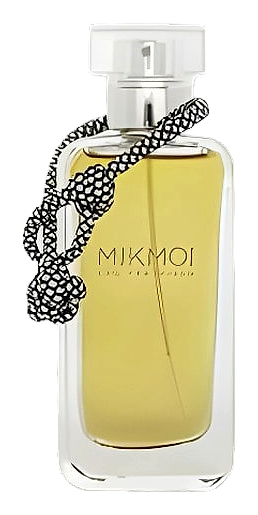
Vesper arrived in 2013 from Michael Coyle, working under the MIKMOI name in San Francisco. The name refers to evening, the hour when light turns amber and the day hands over to night. That threshold is the fragrance. Not a party scent. Not a power move. Something quieter, more deliberate: the moment between the first sip and the last call, when conversation actually means something. Coyle built this around a single tension: the freshness of fig leaf against the warmth of sueded materials. The Lillet accord in the opening isn't literal, it's the idea of an aperitif, the bright bitterness that opens the appetite. The black rose doesn't arrive to complicate things. It arrives to smooth them out. Suede is the connective tissue: not leather, not fabric, but the thing in between.
The combination of black rose and suede is more unusual than it sounds. Black rose, specifically the Baccara variety, carries a dark, wine-like depth that most rose absolutes don't touch. It's not romantic. It's not sweet. It's the rose you'd encounter in a dim room with low light. Suede amplifies that: soft, tactile, close to skin. Neither material shouts, which is exactly why they work together. Fig leaf as a top note is also underused. It gives freshness without citrus, green in a vegetable way, not a lemon way. The milky undertone of fig sap keeps it from reading like grass. When that opening dissolves, what you're left with is the suede-and-rose heart, which then deepens into the resinous base.
The evolution
The opening hits bright and green, with a slight bitterness that reads more metallic than floral. Fig leaf does this, it bruises well. Within ten minutes, the green starts to recede and the suede rises to meet it. The black rose follows, not pushing the suede aside but settling into it. This is the heart of Vesper: soft, dark, warm, and entirely wearable. By the third hour, the frankincense and myrrh have arrived. The amber is present throughout but becomes more apparent now, less sweet, more resinous. The myrrh adds a slight medicinal edge that keeps the base from becomingtoo comfortable. What lingers after hour five is close to the skin: a warm, resinous, slightly dusty trace that doesn't announce itself but rewards anyone who leans in.
Cultural impact
Vesper launched in 2013 alongside the emergence of the indie fragrance movement in the United States, a period when independent perfumers began challenging the conventions of the established industry. MIKMOI, founded in San Francisco that same year, embodied this shift toward minimalism and conceptual rigor. The fragrance arrived during a cultural moment when consumers were beginning to question mass-market scent culture and seeking compositions with genuine artistic intent. Vesper's restraint, its fig leaf brightness giving way to sueded incense, reflected broader design trends toward understatement and quality over quantity. The house's refusal to over-explain its creations aligned with a Bay Area ethos that valued authenticity over marketing.