The Story
Why it exists.
The beginning
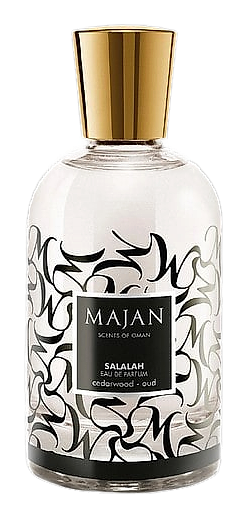
Salalah Cedarwood Oud from Majan reads as a study in restraint, built around a tension between two materials that don't always get along. The opening carries a dry, almost pencil-like cedar character that feels deliberately stripped back, the kind of wood note that smells closer to raw shavings than to the polished, furniture-grade cedar found in many woody compositions. From the first spray, the fragrance sets up an immediate negotiation between that clean dryness and the denser, more animalic presence of oud. Cedar and oud have shared space in Arabian perfumery for a long time, but the usual conversation leans either toward sweet, resinous oud draped over a soft wood bed, or toward smoky compositions where the wood nearly disappears. Here, neither material dominates outright.
What makes Salalah Cedarwood Oud interesting as a release is the way it treats both of its lead materials as equals rather than as leads and supports. The cedar does not function as a simple background for the oud, and the oud does not tower over the wood as the star of the show. Instead, the two rotate through the composition, with the cedar taking prominence in the early stages and the oud gradually stepping forward as the hours pass. That balance gives the fragrance a sense of structure that many oud-heavy releases lack, where the oud can feel like a soloist backed by a quiet ensemble.
The evolution
When Salalah Cedarwood Oud first appeared, it drew attention for the way it handled its two central materials with unusual evenness. The opening stages lean heavily on a dry, almost pencil-sharp cedar character that cuts cleanly through whatever softness might have been expected from an oud composition. That crispness does not last forever, but it defines the first phase of wear and sets the tone for everything that follows. The cedar in those early minutes reads as raw and slightly bitter, closer to the smell of fresh shavings than to the smooth, furniture-grade cedar that dominates many woody fragrances. As the composition moves into its heart, the balance shifts. The oud, which was present from the start but sitting somewhat in the background, begins to push forward, bringing with it a denser, more animalic quality.
Cultural impact
Salalah Cedarwood Oud sits within a broader context of Arabian perfumery that has long treated oud as a material of central importance, and cedar has a long history of appearing alongside it in both private and public fragrance traditions across the Gulf. The pairing of these two materials is not a novelty, but the way this particular composition handles them reflects a more recent sensibility within regional niche perfumery, one that leans toward transparency and material honesty rather than the dense, sweet, almost confectionary oud constructions that dominated earlier commercial offerings.