
The Story
Why it exists.
The beginning
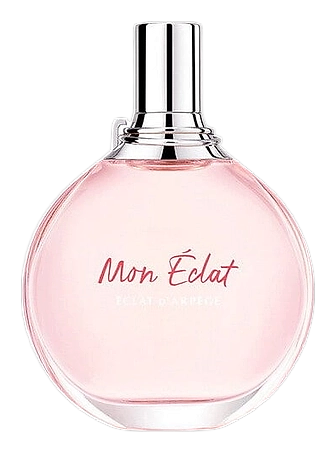
Éclat d'Arpège Pretty Face emerged in 2013 as a collector's edition of Lanvin's 2002 fruity-floral. The original Éclat d'Arpège itself traced back to the house's landmark 1927 Arpège, the legendary creation named for the musical arpeggio, built from Bulgarian rose and Grasse jasmine. Pretty Face arrived as a special presentation: same composition, different bottle, the kind of thing that disappears from counters and ends up on eBay. The name suggests something playful, even girlish. The house clearly didn't intend it to stay.
What's interesting here is the tension between names and notes. Pretty Face sounds sweet. The composition isn't. Hyacinth brings that slightly bitter, almost animalic floral quality, the kind that smells like the garden after rain rather than a perfume counter. Green tea grounds it further, keeping things vegetal and real rather than decorated. Then the peony and peach arrive to smooth things over, but the cedar underneath prevents it from becoming precious. White musk at the base keeps the whole thing intimate, close to skin, never shouting.
The evolution
The opening arrives quietly. Green tea first, not the soft, spa-like green tea of many fragrances, but something stemmier. Almost immediately hyacinth joins, and together they create an impression that's more botanical garden than perfume bottle. For the first twenty minutes, there's a slight sharpness, the kind that makes you check whether it's working on your skin. Then the peach arrives, softening everything. Peony follows, adding body without weight. The whole heart phase is gentler than the opening suggested, a reconciliation rather than a continuation. The drydown takes its time. Cedar emerges slowly, dry and slightly woody, while white musk keeps everything close. By the third hour, you're left with a skin scent that requires proximity to notice. The next morning, faint traces of cedar and musk on fabric. Not loud. Never was.
Cultural impact
Pretty Face was a limited edition, a collector's bottle, not a permanent line extension. That scarcity shaped its reception: those who found it loved it; those who didn't miss it now that it's gone. The fragrance exists in that particular space where a scent becomes more talked-about after discontinuation than it ever was while available.