
The Story
Why it exists.
The beginning
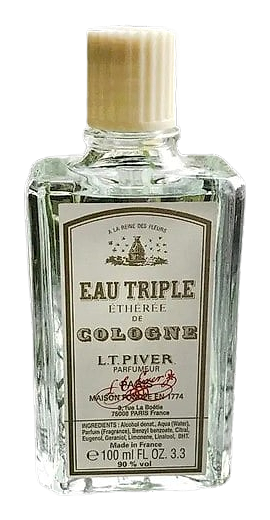
Eau Triple Éthérée belongs to the house of L.T. Piver, a French perfumery name with deep historical roots in Paris. The cologne forms part of a broader portfolio the firm built around its expertise in classic European fragrance traditions. The name itself carries an evocative dual meaning: the Éthérée designation suggests something light, airy, and almost weightless on the skin, while the word Triple hints at a layered intensity that sets this cologne apart from simpler, single-note citrus waters. Together, the two words promise a composition that aims for both clarity and depth, a cologne that lifts off the skin with brightness while still leaving a discernible trail.
The composition that defines Eau Triple Éthérée is built around three central ingredients: bergamot, lemon, and neroli. These three elements work in concert to create a cologne that is simultaneously bright, green, and softly floral. Bergamot contributes its characteristic bitter-citrus sparkle, lemon adds a sharper acidic lift, and neroli brings the indolic sweetness of orange blossom into the mix.
The evolution
The original Eau Triple Éthérée formula has been anchored to the citrus trio of bergamot, lemon, and neroli since its earliest days, and that three-note foundation has remained the defining structure of the composition. The fragrance survives as a working cologne rather than a museum piece, maintaining its identity even as broader trends in perfumery shifted toward heavier, more opulent constructions. Where many classic colognes were reformulated beyond recognition or discontinued entirely as consumer tastes changed, Eau Triple Éthérée held its course, preserving the clean, bright character that made it a staple in the first place. The appeal of the cologne today lies in this consistency: a fragrance that delivers exactly what its name promises, without unnecessary embellishment or trend-chasing modifications.
Cultural impact
Eau Triple Éthérée belongs to a small group of French colognes that survived the shift from 19th-century apothecary perfumery to modern luxury branding without losing their identity. The fragrance helped establish the citrus-and-neroli template that became one of the most enduring structures in Western perfumery, a framework built on the interplay between bitter citrus, sharp acidity, and the soft indolic sweetness of orange blossom. This template proved remarkably influential, informing countless compositions that followed and shaping the way eau de cologne as a category was understood by both perfumers and consumers.