The Story
Why it exists.
The beginning
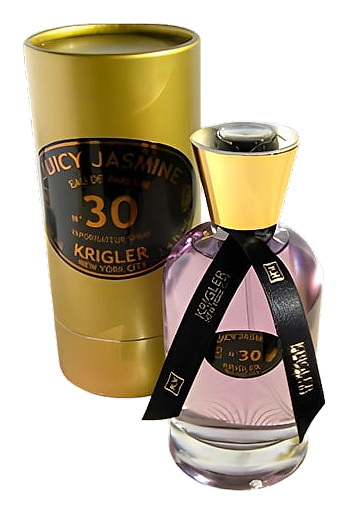
Krigler crafted Juicy Jasmine 30 in 1930, though the name tells only half the story. The official line, her love for Provence expressed in a fragrance, suggests warmth and abundance. What Krigler delivered was drier, more complex. Pure jasmine absolute, handled with restraint. The orange blossom adds a tang, not sweetness. It's the fragrance of a woman who didn't need to explain herself.
What makes this composition unusual is its internal conversation. Jasmine opens sharp and green-stemmed, almost cool. Then ylang-ylang takes over around the first hour, warmer, rounder, softer. The two florals aren't layered so much as they take turns. Hyacinth bridges them with its green snap. Guaiac wood waits in the base, grounding everything that came before. It's a soliflore that refuses to stay still.
The evolution
The opening floods with jasmine absolute, immediate, clean, nothing indolic. Green stems at the edges. Around the first hour, the ylang-ylang begins its quiet coup. The composition softens, warms, becomes something different. By hour three, guaiac wood and lily of the valley settle close to skin. The sillage remains strong throughout, projecting without announcing. On fabric, it lingers past ten hours. On skin, it rewrites itself twice.
Cultural impact
Juicy Jasmine 30 occupies an unusual position: a 1930s floral that refuses to smell dated. The dry jasmine character appeals to wearers who find modern white florals too sweet or too loud. It's been worn quietly for decades, neither trend-following nor trend-setting, just lasting.