The Story
Why it exists.
The beginning
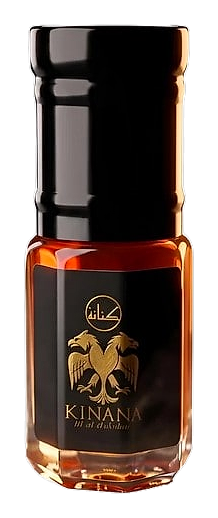
Xiang. Kinana launched it in 2026 as part of the house's Organic Oud collection, and the fragrance refuses the modern instinct to build pyramids. There are no top notes here, no clever transitions, no topper meant to lure you in before the real business begins. There is only Chinese oud, presented in its most considered form, raw and unblended, offered as the entire composition rather than tucked into a supporting role. The structural decision tells you what the house wanted: a single material, given the space to speak without accompaniment or dilution, a fragrance that arrives as a whole statement rather than a sequence of negotiations between competing notes. Every spray delivers the same message, the same density, the same character from the first moment to the last trace on skin.
Chinese oud carries a distinct voice in the wider world of agarwood materials, shaped by the trees it comes from and the conditions under which the resin develops. The scent profile leans into wood, smoke, and resin in a way that feels grounded rather than ornamental. Rather than blending multiple oud origins or cushioning the material with complementary notes, Kinana's approach with Xiang is to let one origin hold the entire composition on its own. No masking, no harmonizing, no attempt to round the edges with sweetness or fruit or florals.
The evolution
There is no traditional opening here. No citrus burst, no spice lift, no floral overture to ease you in. What you smell at the first spray is the material in its raw, unmediated form: smoke and wood, the unmistakable character of agarwood resin delivered without mediation. The first thirty minutes carry the densest expression of the composition, a thick curtain of oud that sits close to the skin with a weight you can feel as you move. As the hours pass, the smoke softens, settling into quieter registers rather than disappearing entirely. What replaces the initial intensity is not a different note but a quieter version of the same one, the resinous quality deepening, the wood becoming more present, and the overall impression shifting from assertive to contemplative without ever changing its fundamental identity.
Cultural impact
Xiang speaks directly to a specific kind of collector: the one who wants the material itself, not a fantasy built around it. A pure single-origin Chinese oud oil, presented without compromise, offers something that blended compositions cannot: the chance to know one origin deeply, to understand its particular character without the noise of competing notes. This is fragrance for the person who already owns several ouds and knows the difference between them, who can distinguish one origin from another by scent alone, and who values the unmediated encounter with a raw material over the comfort of a familiar blend.