
The Story
Why it exists.
The beginning
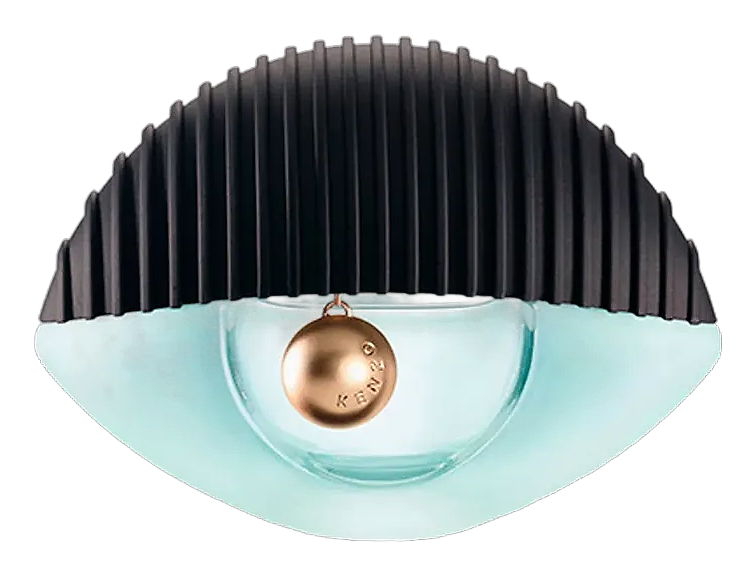
Kenzo World arrived in 2016 as the first fragrance from new art directors Humberto Leon and Carol Lim, a departure from the house's floral heritage, not a continuation of it. The brief was clear from the start: bold, spontaneous, surprising. Francis Kurkdjian was given a single constraint, make peony and jasmine feel unfamiliar. His answer was ambroxan, deployed not as a base note but as the composition's defining element. The all-seeing eye that became the collection's symbol points to this: Kurkdjian saw something in those florals that others had missed, and he built the entire fragrance around revealing it.
Ambroxan is the key. Kurkdjian himself has described it as functioning like sfumato, Leonardo's technique of juxtaposing power and mist so that contours blur and only the hazy outline remains. In Kenzo World, the ambroxan doesn't soften the flowers. It blurs their edges until they become something harder to name. That's the sfumato effect: you see the bouquet, but you can't quite touch it. It's the reason this doesn't smell like every other peony fragrance. It's also why the scent reads as modern rather than romantic, the florals are present but deliberately imprecise, shaped by chemistry into something the garden never made on its own.
The evolution
The opening hits quick. Red fruits, tart, sweet, immediate. Berries that arrive before you've finished spraying. Within minutes, peony rises through them, pushing the fruit toward the edges. Jasmine follows, creamier, adding weight to what could have stayed too light. The ambroxan is there from the start, a low hum beneath the florals, but it doesn't take over until the drydown. That's when the flowers begin to dissolve. Not disappear, dissolve. The peony becomes a memory of itself, and the ambroxan steps forward, mineral and warm, close to skin. This is where the fragrance lives for most of its 6-8 hour arc: intimate, hazy, impossible to pin down. Moderate sillage throughout means it doesn't announce itself so much as invite inspection.
Cultural impact
Kenzo World arrived as a statement of intent from new art directors, fresh creative direction signaling that the house was willing to take risks. The all-seeing eye motif, referencing Hindu and Buddhist symbolism of the third eye and spiritual protection, gave the fragrance a conceptual layer beyond the usual floral positioning. The ambroxan-forward approach was unexpected in a mainstream women's fragrance, positioning it as a bridge between accessible design and something more experimental. It found its audience among wearers who wanted the house's colorful spirit without the predictable floral template.