
The Story
Why it exists.
The beginning
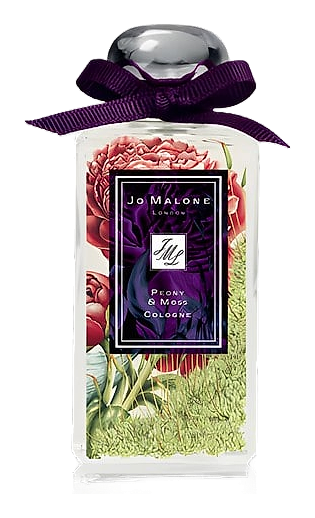
Christine Nagel designed Peony & Moss in 2012 as part of the London Blooms collection, a trio of scents built around the art of English botanical gardening. The brief wasn't merely 'floral.' It was something more specific: the feeling of a walled garden after rainfall, when the air is heavy with wet stone and the blooms are somehow more themselves for the drenching they've just survived. Nagel's job was to hold two things at once, the delicacy of the flower and the quiet stubbornness of the earth beneath it.
Oakmoss in perfumery is a base note with a double personality: it can smell like dried leaves left too long in autumn, or it can smell like the underside of a stone in a forest after three days of rain. The difference is in what surrounds it. Here, the peony doesn't fight the moss, it grows over it, through it. The blackcurrant adds a tartness that keeps the florals from cloying. Ivy brings the green that makes everything feel alive, not arranged. This is a chypre stripped to its skeleton, no animalics, no heavy aldehydes, just the botanical truth of a garden that exists whether anyone is watching it or not.
The evolution
The opening arrives crisp. Blackcurrant and ivy together read like a greenhouse door left open in the morning, dewy, slightly tart, green without being sharp. Then the peony softens everything. It's not the loud first act of a fruity floral. It arrives like a statement made quietly in a large room, you notice it precisely because it didn't try. The heart holds for two or three hours, the floral and the green sharing space without either dominating. Then the oakmoss takes over. Not dramatically. Slowly, like fog rolling in from a garden's edge. The drydown is damp earth and green stem, the smell of something that was alive and is honest about it. On fabric, it fades by the sixth or seventh hour. On skin, a faint mossy warmth can linger into the next morning.
Cultural impact
Peony & Moss arrived as part of Jo Malone London's celebrated English Fields collection, drawing inspiration from the British countryside and traditional rural life. The fragrance reflects a broader cultural movement in perfumery during the early 2010s that saw brands reimagining garden and nature-inspired scents with contemporary sophistication. Peony, once considered a rather traditional note in perfumery, received renewed attention through this modern interpretation, helping to establish it as a versatile centerpiece in fragrance composition. The combination with moss and green notes positioned the scent as an accessible entry point into niche-style perfumery for mainstream consumers.