
The Story
Why it exists.
The beginning
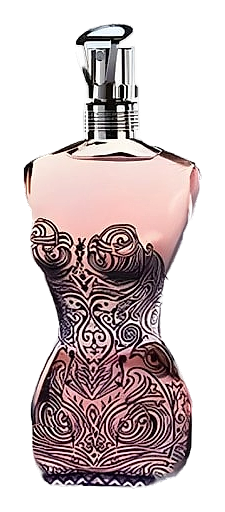
Gaultier's Classique needed a summer version. The original was already an icon by 1997, the corset bottle, the floral warmth, the whole attitude. A summer flanker had to carry that weight without melting under pressure. The solution was subtraction, not addition. Strip back to rose, jasmine, vanilla. Let each one breathe.
Rose and jasmine are a classic pairing, but this composition gives jasmine center stage. The heart note arrives quickly and stays longest, that creamy, romantic warmth that keeps the rose from going sharp and stops the vanilla from going too sweet. It's the structural pivot point. Without it, you'd have an opening and a drydown. With it, you have a fragrance that actually develops.
The evolution
Rose arrives first. Clean, slightly dewy, the kind of opening that announces itself without introduction. Within thirty minutes jasmine softens everything, a gentle warmth that makes the rose smell richer, almost honeyed. Then the hand-off to vanilla begins. Slow. The base doesn't replace the florals; it weaves into them until you can't find where one ends and the other begins. The drydown is intimate. On skin it reads as warmth. On fabric it lingers as the ghost of petals pressed between pages.
Cultural impact
JPG fragrances are built for presence. Not shouty, but impossible to ignore. The 1997 Classique L'Eau d'Ete fits that template: three notes, clear structure, something that announces itself in a room and leaves an impression that outlasts the sillage. It represents a quieter era of JPG design, before the brand became a maximalist spectacle.