The Story
Why it exists.
The beginning
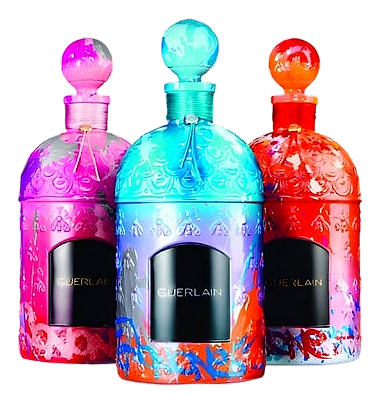
Francis Kurkdjian created Rose Barbare for Guerlain's L'Art & La Matière collection. The composition centers on Turkish rose absolute, supported by aldehydes and fenugreek. The combination of these materials creates a fragrance where the rose asserts itself prominently rather than serving as a subtle background element. The fenugreek note carries a bitter, maple-tinged quality that shapes how the honey reads, warm rather than sweet. Its presence in the formula affects the overall impression, keeping the composition from feeling merely polite or conventional. The official copy calls it 'tinted with a burning shade of deep pink, like a drop of blood.' That image, warm, alive, not quite safe, captures the character of this fragrance.
Using the same material in top and heart is a Guerlain move. Turkish rose absolute opens the fragrance and reappears in the heart, but the aldehydes that precede it in the opening have already shifted how it reads. The rose feels elevated and lifted in the opening moments. In the heart, it arrives heavier, doubled, threaded through with fenugreek's dark herbal undertone. The ingredient doesn't change. The context does. That's the compositional argument here, and the reason the drydown feels purposeful rather than accidental.
The evolution
The opening arrives with aldehydes lifting the rose straight up, bright and metallic, with a soapy clarity that fades relatively quickly. Within the first hour the aldehydes recede and the heart takes over, the same rose, now richer, grounded by fenugreek's bitter spice. Honey adds warmth without sweetness. Patchouli keeps it close to skin. The drydown settles into a warm, slightly animalic honey and patchouli combination that stays close, lasting through the evening with occasional presence on fabric the next morning. The fragrance develops in distinct phases, each one revealing a different facet of the rose and its supporting cast of materials. What begins bright and assertive settles into something more intimate and contemplative.
Cultural impact
Guerlain's L'Art & La Matière collection presents fragrances meant to be encountered rather than merely worn. Rose Barbare joins this lineup with an unusual rose composition that draws attention for its inclusion of fenugreek. This bitter, herbal note creates a counterpoint within the rose structure that sets it apart from more conventional approaches. The unconventional combination keeps the fragrance in conversation among those who explore it, its distinctive character providing plenty to discuss long after first encounter. For those drawn to rose compositions that challenge expectations, this one offers a different kind of story.
The House
GuerlainGuerlain stands as one of the oldest and most revered perfume houses in the world, founded in Paris in 1828 by Pierre-François-Pascal Guerlain. What began as a boutique on rue de Rivoli quickly became the preferred destination for Parisian society, attracting dandies and elegant women who sought custom-crafted fragrances. The house's influence grew to such heights that Guerlain earned the title of Official Perfumer to Napoleon III after presenting Eau de Cologne Impériale to Empress Eugénie as a wedding gift in 1853. This royal patronage marked the beginning of Guerlain's enduring association with European aristocracy, as the house went on to create fragrances for Queen Victoria and Queen Isabella II of Spain. Today, under the creative direction of Thierry Wasser, the fifth-generation perfumer, Guerlain continues to shape the landscape of fine fragrance with a portfolio spanning over 1,100 olfactory creations. The house remains headquartered at its legendary Champs-Élysées mansion, a historic monument that anchors Guerlain's position at the intersection of heritage and contemporary luxury.
The Creator
Francis KurkdjianFrancis Kurkdjian's signature style is characterized by a remarkable luminosity and a sophisticated elegance. He often employs a radiant, almost translucent quality in his compositions, even when working with rich or dense materials.