The Story
Why it exists.
The beginning
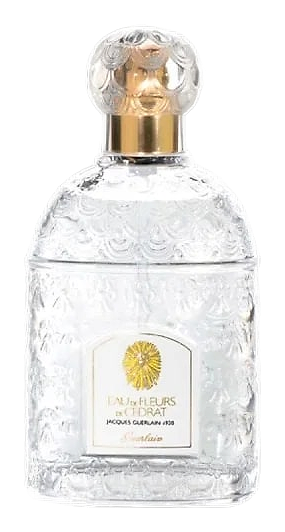
In 1870, Guerlain first interpreted the cedrat, a citrus fruit. Ten years later, Aimé Guerlain refined that vision into Eau de Cédrat. By 1920, Jacques Guerlain returned to the idea with a different intention. The earlier attempts had chased citrus as a sensation. This version took a different approach. Eau de Fleurs de Cédrat became the most citrus-heavy of Guerlain's Les Colognes, but the heaviness was in spirit, not volume, a composition built on the idea of a particular kind of freshness. Lemon verbena entered as a corrective. It didn't amplify the citrus. It complicated it, softened the sharpness of the cedrat into something herbal and almost medicinal, and let the whole thing breathe.
What makes the 1920 structure interesting is the verbena intervention. The cedrat and bergamot open with genuine intensity, but verbena is already waiting, and it changes the character of the citrus by tempering it. The addition of verbena as the heart note introduces a green, herbal complexity that shifts the fragrance's trajectory. Where a citrus fragrance might simply announce itself and disappear, this one holds back, revealing its depth gradually.
The evolution
The opening arrives immediately. Bergamot and cedrat hit together in a single bright wave, the kind of citrus that almost stings, then softens within minutes as the verbena takes over. That transition is where the character lives. The verbena doesn't fight the citrus. It argues with it. A subtle bitterness enters, something green and herbal that makes the sweetness of the opening feel like it was earned rather than handed out. Cedar arrives quietly, underneath, providing warmth that wasn't obvious in the opening. The citrus doesn't disappear so much as it recedes, by hour two, you're wearing verbena and cedar more than bergamot and cedrat. The drydown is subtle and close to the skin, but it's the part that makes you catch yourself and wonder what you're wearing. This is a fragrance designed to be present for a morning, not a night.
Cultural impact
Eau de Fleurs de Cédrat belongs to the Les Colognes collection, Guerlain's family of lighter, more effervescent compositions designed for daily wear rather than statement. The 1920 release arrived during a period when colognes were being reconsidered by serious fragrance houses. Within Guerlain's own catalog, this one stands apart: the most citrus-heavy of the Les Colognes, a composition that takes citrus as its central material and explores what can be done with it beyond the obvious. It's been in continuous production since 1920, which is its own kind of statement.