The Story
Why it exists.
The beginning
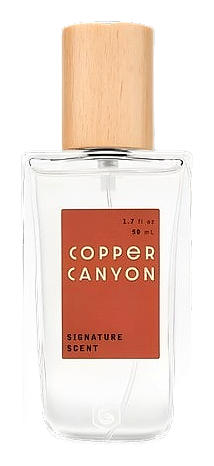
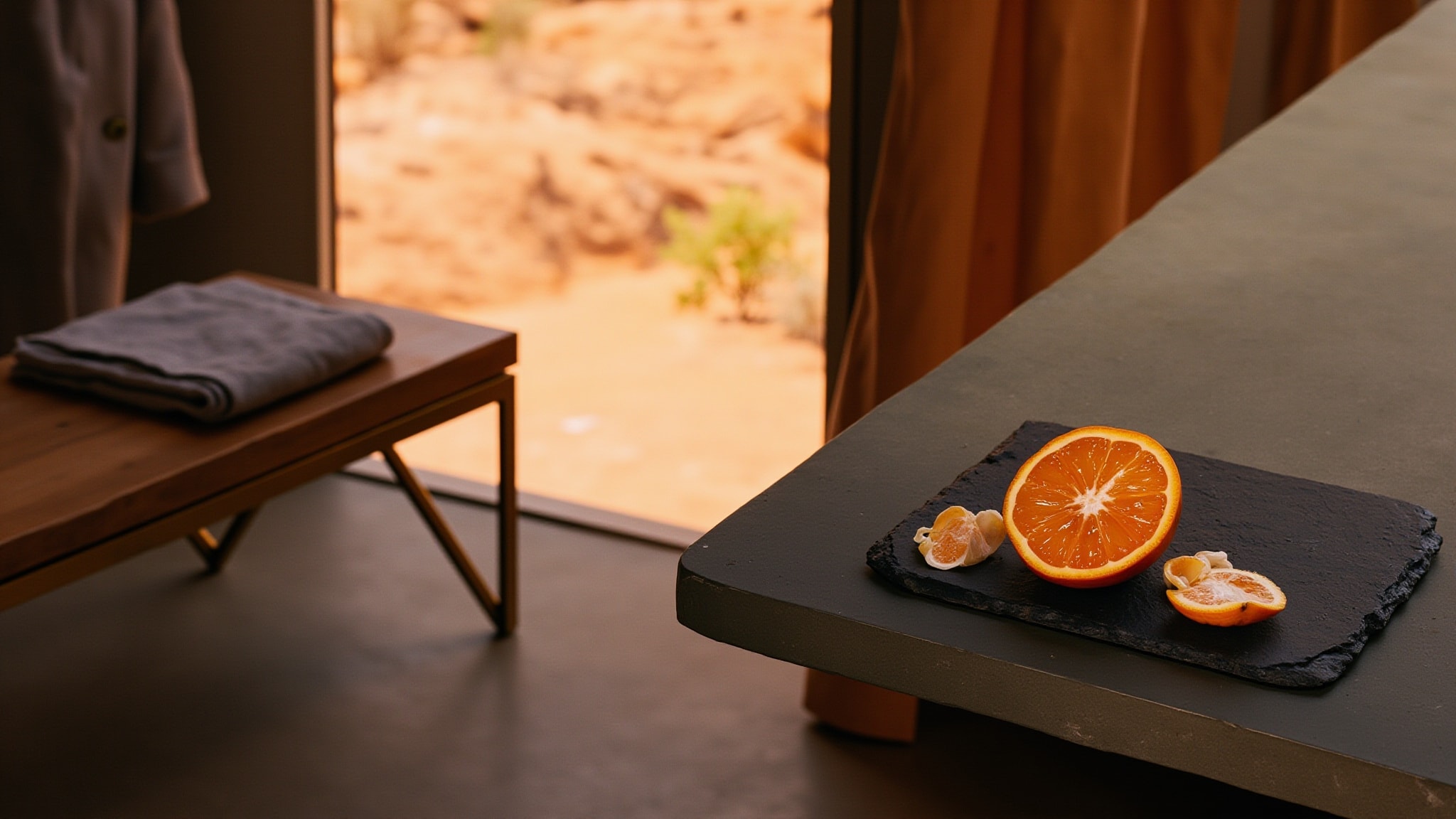
Copper Canyon arrived in 2020, and the name points somewhere specific: a place, not an idea. The scent tries to bottle a landscape, mineral, exposed, and surprisingly green. Mandarin orange stands in for the heat bouncing off the walls. Oakmoss is the scrubby growth clinging to the slopes. Amber pulls the whole thing into focus, like the moment the canyon walls glow at the end of the day. The composition is built on just three notes, and the brief reads like a postcard from somewhere hot and dry. There's no sweetness trying to soften the edges, no fruit-punch shimmer crowding the top. What you smell at first spray is a citrus that feels almost edible, more zest than juice, the kind of brightness that lifts off the skin quickly and leaves behind something quieter.
What's worth noticing here is the restraint. Three notes. No amber-heavy gourmand pile-up, no moss trying to dominate the composition. Good Chemistry kept the structure simple. Mandarin orange is bright but grounded, not the juicy breakfast-fruit version. Oakmoss carries weight without tipping into the leather-and-tobacco territory. The amber holds the structure together. That simplicity is the move. A composition with three ingredients that reads as full and dimensional is harder to build than one with thirty. Less is the whole point.
The evolution
The opening belongs to the mandarin. It hits sharp at first contact, not candied, more like peel cracked between fingers rather than juice squeezed over ice. That citrus brightness sits on top of something darker almost immediately, and the oakmoss arrives before the transition fully registers. The green isn't pretty-garden green. It's damp, mineral, the kind that smells like rain on warm stone or lichen on a north-facing wall. The citrus then thins to a memory. The moss takes the lead, dense and slightly bitter, with an almost metallic edge that keeps it from reading sweet or soft. The amber starts surfacing as the composition settles. It's not the syrupy, vanillic amber from sweeter fragrances. This one reads warmer, drier, closer to the scent of sun-baked rock than to any dessert.
Cultural impact
Copper Canyon arrives as part of a growing wave of nature-named, place-inspired fragrances that aim to bottle a sense of geography rather than glamour. By keeping the note list to just three ingredients, the composition sidesteps the trend toward ever-larger fragrance pyramids and instead leans into minimalism as a design choice. The result is a scent that reads as earthy, mineral, and grounded rather than the polished florals or sweet gourmands that dominate much of the accessible fragrance market. It also speaks to a broader shift in what consumers are asking of affordable scents: less complexity on paper, more specificity in the bottle.