
The Story
Why it exists.
The beginning
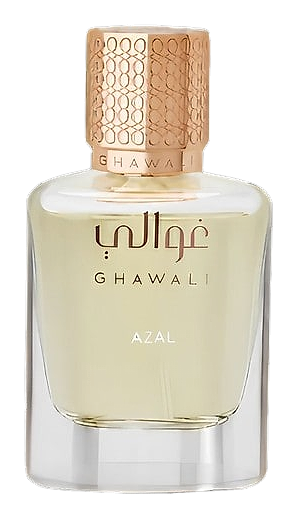
Azal is one of three oud-led releases marketed by Ghawali in the same calendar year, the same window that put Al Nobl Oud and Al Abiq Oud into circulation. The brand itself is being marketed by Chalhoub Group Limited, a Dubai-based luxury conglomerate with a hand in fashion, beauty, and fragrance distribution across the Middle East. The brand's own copy frames Azal as an "enveloping perfume that celebrates the timeless beauty of the ancient monuments of the Middle East," built around the long marriage between saffron and cardamom in regional perfumery. Ghawali's other well-known releases include Oud Mood Elixir, Al Abiq Oud, Al Nobl Oud, Mukhallat Dahn Al Oudh Moattaq, and Wujood Oud, which speaks to a house vocabulary fluent in resin, wood, and spice.
What makes Azal memorable within the saffron-cardamom register is the praline at the base. Most compositions in this style tend to settle into dry wood, dry musk, or pure oud territory, and Azal refuses that gravity. Ghawali drops a gourmand sweetness into the foundation, and the cedar-praline-oud triangle does something unusual: it tempers the saffron's metallic edge without dulling it. The oud is present but not dominant. It functions as ballast rather than spectacle, a quieter choice than the brand's louder oud-forward work.
The evolution
The opening is a short, bright argument. Cardamom arrives first, almost green, almost cold, with the snap of a seed cracked between teeth. Within five minutes the saffron threads in, and the temperature shifts. It gets dense. The cedar shows up to hold the structure, but patchouli does the connective work, lending a soft earthiness that makes the whole heart phase feel like a room with the curtains drawn. Around the two-hour mark the praline surfaces, not as sugar but as something roasted, almost nutty, and the oud underneath stops being theoretical and starts smelling like actual wood. The drydown is where Azal settles into its real voice: vanilla and oud, close to skin, warm without sweetness. On fabric the next morning it's a clean cedar-praline whisper with a faint animalic hum.
Cultural impact
Azal resonates with wearers because it commits to saffron and cardamom without retreating into the bone-dry finishes that flatten many oriental compositions. The praline-vanilla base softens the composition's grip, giving it an accessibility that some of the brand's more resin-heavy work lacks. Wearers often gravitate to Azal as a point of entry into Ghawali's wider catalog, drawn by its balance of spice and sweetness before exploring the more austere pieces.