The Story
Why it exists.
The beginning
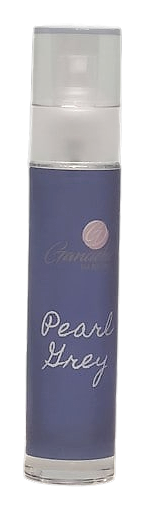
Pearl Grey arrived in 2018 from Jarekhye Covarrubias, who has built a small catalog around the idea that familiar scents deserve a second look. Earl Grey is everywhere, in the morning cup, in candles, in bath products. But rarely does it become something worth wearing on skin. Covarrubias took the drink most people encounter without thinking and made it something worth lingering over. The perfumer stripped Earl Grey back to its component tension: bergamot's citrus brightness against the tannic warmth of black tea, with a faint floral undertone lavender can amplify. Milk was the answer to the question of how to make it last, not sweetness, but softness. The result feels less like fragrance and more like a ritual. Covarrubias has spoken about wanting compositions where each note stays recognizable. Pearl Grey is that philosophy made tangible: you can smell every layer without needing a trained nose.
What makes Pearl Grey interesting is what it doesn't do. It doesn't lean into sweetness, despite the milk note. It doesn't go medicinal, despite the lavender. The balance is genuinely unusual, a lactonic fragrance that never tips into dessert territory, an aromatic one that never goes soapy. Earl Grey functions as a bridge between the lavender's herbal cool and the milk's warmth. Without the bergamot, the composition would be flat. Without the black tea backbone, it would lose structure. Without the lavender, it might smell like a latte. Instead it smells like the act of making tea, deliberate, unhurried, private. That restraint is what separates niche composition from commercial interpretation.
The evolution
The opening announces itself briefly with bergamot's citrus brightness, maybe fifteen minutes of sharp clarity before the Earl Grey settles in. This is the tea phase, aromatic, slightly bitter, quietly warm. Lavender arrives alongside it, adding a cool herbal counterpoint that keeps the citrus from sharpening further. The two notes share the middle hours, pushing and pulling against each other. What surprises is the milk. Not a sudden sweetness, but a gradual softening, the drydown arrives by hour two or three and it stays close, creamy, lactonic. The longevity holds a solid four to six hours on most skin, with the milk note lingering longest near the pulse points. It's not a fragrance that announces itself across a room. It rewards proximity.
Cultural impact
Tea-forward fragrances gained quiet momentum in the late 2010s, finding an audience among wearers who wanted something different from the dominant sweet and woody compositions of the period. Pearl Grey entered that space with a specific point of view, Earl Grey as a concept worth taking seriously, augmented by lavender and milk rather than bergamot alone. Community response on niche forums has been mixed, the kind of divided opinion that signals genuine personality rather than generic appeal. It's the fragrance people either seek out or skip entirely, worth trying if the idea of a lactonic, lavender-leaning Earl Grey sounds like something you'd wear on purpose.