
The Story
Why it exists.
The beginning
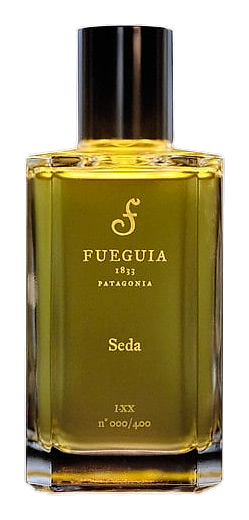
Seda means silk in Spanish. And there is something in the research about a butterfly leaving a silkworm, a quiet metamorphosis, the familiar made into something you almost don't recognize anymore. Julian Bedel designed this fragrance around a single material's full arc. No top-heart split, no competing voices. Jasmine sambac opens and jasmine sambac lingers. Amber catches what falls. The Fábula Fauna collection rewards those who read the footnotes, each fragrance a field note from the edge of something.
Using jasmine as both opening and heart note is a structural decision that most perfumers avoid. The instinct is to build, to transform, to give the wearer something new around the 20-minute mark. Seda refuses that contract. Instead, it asks: what if the same flower could be bright AND intimate, fresh AND warm, clean AND animalic? The answer lives in the amber. Not any amber, the kind that emerges slowly, warm and slightly salty, the molecular weight of something that has been on skin long enough to become skin itself. This is jasmine stripped of everything performative. Just the bloom. Just the warmth underneath.
The evolution
The opening arrives without ceremony. Jasmine sambac in its cleanest form, a whiff of petals bruised by morning rain, a cold greenhouse on the edge of a garden. For the first five minutes, the fragrance reads almost clinical. Then the animalic warmth starts. By the heart phase, jasmine has taken full control. The bright, dewy quality recedes into something heavier. More intimate. The kind of floral that smells like skin warmed by fabric, like proximity rather than projection. This is where Seda earns its name, silk against skin, the smell of something worn close. The drydown is amber's turn. Not the amber of orientals, resinous, thick, theatrical. The amber of this composition is warm and clean, faintly animalic in that organic way that suggests skin rather than perfume. Jasmine never fully disappears. It becomes the white floral threading through amber molecules, the warmth that stays behind when everything else has faded. The final hours are intimate. You smell it. The people you're close to smell it. No one across the room has any idea.
Cultural impact
Seda represents a quiet counterpoint to the maximalist trends dominating niche perfumery. The 2020 launch arrived during a period when fragrance houses increasingly relied on complex pyramids and statement sillage to capture attention. Julian Bedel, founder of Fueguia 1833, has consistently framed his house as an ethnobotanical research project rather than a commercial enterprise, and Seda embodies that philosophy through radical restraint. The jasmine sambac used in Seda connects to traditions of jasmine cultivation across South Asia, while the amber grounds it in classical perfumery.